Two useful ways to book Moon Valley
The Valle de la Luna Shared Sightseeing Tour (4.7/5 from 366 reviews) is a good fit if you stay centrally, can reach Tocopilla 418 yourself and are happy to arrange the reserve ticket. The Valle de la Luna guided tour with entry and cocktail (4.5/5 from 443 reviews) is easier to budget because the current listing includes reserve admission, hotel transport and snacks.
Do not compare the starting prices as if they bought identical services. Add the missing ticket and consider whether getting to the agency is convenient. An included cocktail can be pleasant, but the landscape and the departure logistics are stronger reasons to choose one product over the other.
| Detail |
Shared sightseeing |
Ticket & cocktail option |
| Duration |
About 4 hours |
About 4 hours |
| Start |
Agency meeting point |
Hotel pickup listed |
| Reserve ticket |
Extra; purchase in advance |
Included |
| Refreshments |
Not included |
Snacks and cocktail |
| Best fit |
Independent central stay |
Fewer separate arrangements |
More half-days near San Pedro
Pair it with the dunes of Valle de la Muerte, floating in Laguna Cejar or a night of stargazing.
Valle de la Luna at a glance
|
|
| Where |
The Cordillera de la Sal, about 13 km from San Pedro de Atacama |
| Entry |
CLP 10,800 general admission (checked October 2026); some visitor categories pay less, shown at checkout |
| Tickets |
Online only, at valledelaluna.com; valid only for the date you choose |
| Access |
By car, motorbike or bicycle only; people on foot cannot enter |
| Vehicle entry |
09:00–17:00 from September to March; 08:00–16:00 from April to August |
| Bicycle entry |
09:00–11:00 from September to March; 08:00–11:00 from April to August |
| Mirador de Ckari |
Closed until further notice since 27 May 2026 |
| Not allowed |
Drones, pets, smoking, alcohol and picking up rocks or minerals |
| Speed limit |
20 km/h inside the valley |
| Tour length |
About 4 hours with transport |
The hours and rules come from the official site of the Asociación Indígena Valle de la Luna (valledelaluna.com), and the entry price from the Los Flamencos reserve booking site (reservanacionallosflamencos.cl).
Closures in 2026
Mirador de Ckari. The official site says the Ckari viewpoint, the clifftop where sunset tours traditionally ended, has been closed until further notice since 27 May 2026 for a safety assessment after an earthquake. No reopening date has been published. Some tour listings still name Ckari, so ask the operator where the tour watches sunset before you pay.
Staff-training days. The official notice lists full closure days with no public entry in October 2026; the last is on 27 October. More training days may follow in later months, so check the notice on valledelaluna.com before you book a date.
Weather. Sectors can close for strong wind and dust in winter and for the rare summer rain of January to March.
Where to watch sunset now
- On a sunset tour. Operators have adapted, and guides now finish at an authorised spot in the Cordillera de la Sal. Several end with a cocktail and snacks.
- At Valle de Marte (Valle de la Muerte). This separate valley lies about 2 km from town, with its own ticket, and its viewpoints look across the dunes to Licancabur.
- Both in one day. Visit Valle de la Luna by car in the morning or early afternoon, then drive to Valle de Marte for sunset.
The best light is often behind you: as the sun drops in the west, look east, where the Andes and Licancabur turn pink.
What you see on the route
The selected itineraries name Duna Mayor, the Amphitheater and Tres Marías, with a sunset stop in the wider area. Expect short walks, uneven ground and time getting between stops. This is a guided landscape visit, not an unrestricted hiking ticket or a sandboarding session.
| Site |
What it is |
Status (October 2026) |
| Duna Mayor |
A ridge walk above the great dune, with the classic view of Licancabur |
On the visitor route |
| Anfiteatro |
A huge curved rock wall, seen from the trails |
On the visitor route |
| Mirador Achaches |
A longer lookout trail with wide valley views |
Named by some operators; ask whether your tour includes it |
| Las Cornisas |
A ledge trail along the ridges, exposed to wind and dust |
Named by some operators; ask whether your tour includes it |
| Mina Victoria |
The ruins of a 20th-century salt mine |
On the visitor route |
| Las Tres Marías |
Salt, clay and quartz figures behind a barrier |
On the visitor route |
| Salt caves |
Narrow salt canyons and tunnels |
Not on the list of visitor sectors |
| Mirador de Ckari |
The clifftop sunset viewpoint over the valley |
Closed since 27 May 2026 |
The visitor-route list follows the Chile Travel guide to the valley (May 2025); the Ckari status comes from the official site. Visitors enter in small groups, and rangers check you in at reception and explain the route.
Sunset excursions suit the changing light on the salt formations and surrounding mountains. The actual departure time changes with the season, so trust the time in your dated confirmation over one copied from an older review. Some advertised viewpoint names and route details vary between products.
Book the right reserve ticket
The shared listing tells guests to buy admission before departure through the reserve’s booking website. Follow the link in the supplier’s confirmation and match the visit date. Ask for help before the meeting time if the ticket categories or payment process are unclear.
The more inclusive alternative lists the Valle de la Luna ticket in the reservation. Reconfirm this for the selected option, then avoid buying a duplicate ticket. A tour title containing “Valle de la Luna” alone does not tell you whether admission is bundled.
Buying the ticket yourself
- Go to valledelaluna.com, the site of the Asociación Indígena Valle de la Luna. Look-alike guide sites do not sell official tickets.
- Choose Buy tickets, then your date and the visitor categories.
- Pay by card online.
- Save the QR code offline, because the signal inside the valley is patchy.
- Arrive within the entry window for your vehicle or bike, and show the QR code and any discount ID at reception.
- Remember that the ticket is valid only for the date on your order. It cannot be moved to another day.
Tour or do it yourself?
| Option |
Ticket included? |
Sunset? |
Suits |
Drawbacks |
| Shared tour |
Usually not |
Yes, at an authorised viewpoint |
First-timers without a car and solo travellers |
Busy trails in the late afternoon; fixed stops |
| Tour with entry and refreshments |
Yes, on the listing we link |
Yes |
Travellers who want one booking for everything |
A higher price |
| Private tour |
Ask |
Yes, at your own pace |
Families and slow walkers |
The cost for a small group |
| By car |
No, buy it online |
Not inside the valley; add Valle de Marte |
Road-trippers |
Strict entry times |
| By bicycle |
No, buy it online |
No; bike entry ends at 11:00 |
Fit travellers on a budget |
Heat, headwind, sand and nowhere to buy water |
Our picks. For most first-timers, the shared sightseeing tour plus a separate ticket is the simplest sunset plan; choose the entry-and-cocktail tour if you want pickup and the ticket in one booking. For a higher-priced sunset outing, the Valley of the Moon sunset tour on Viator (from US$80, 4.8/5 from 417 reviews) is well reviewed. Families who want their own vehicle and pace can book the Private Tour to Valle de la Luna on Viator (from US$420, 4.8/5 from 44 reviews). Neither marketplace had a guided Moon Valley bike tour when we checked, so cyclists rent a bike in town.
By car. A normal car handles the gravel road; you do not need a 4x4. Go at opening time, when the trails are quiet and the air is cool. Start at Duna Mayor before the wind rises and the tours arrive, then work through the other sites. The road is a linear out-and-back, so you return the same way. Drive slowly on the sandy surface and carry a spare tyre, because there is no signal.
By bike. Entry closes at 11:00, so leave town early. Carry 2–3 litres of water each, because there is nowhere inside to buy any, and expect a hot ride back into the afternoon wind.
Valle de Marte as the sunset alternative
Valle de Marte, also called Valle de la Muerte, is a separate valley in the same salt range, about 2 km from town, with its own manager and its own ticket. It is known for its tall dunes and sandboarding, and its upper viewpoints look across to Licancabur at sunset. It works as a DIY sunset after a morning in Valle de la Luna, or as a short outing in its own right. The tour comparison covers sandboarding there.
Not the Valle de la Luna in Bolivia or Argentina
| Name |
Country |
What it is |
| Valle de la Luna, San Pedro de Atacama |
Chile |
The salt-and-clay valley on this page |
| Valle de la Luna (Killa Qhichwa) |
Bolivia |
A small park of eroded clay pinnacles on the edge of La Paz |
| Valle de la Luna, Ischigualasto |
Argentina |
A provincial park in San Juan, a UNESCO World Heritage site known for its Triassic fossils |
| Valle de Marte (Valle de la Muerte) |
Chile |
A separate valley near San Pedro, with dunes and sandboarding |
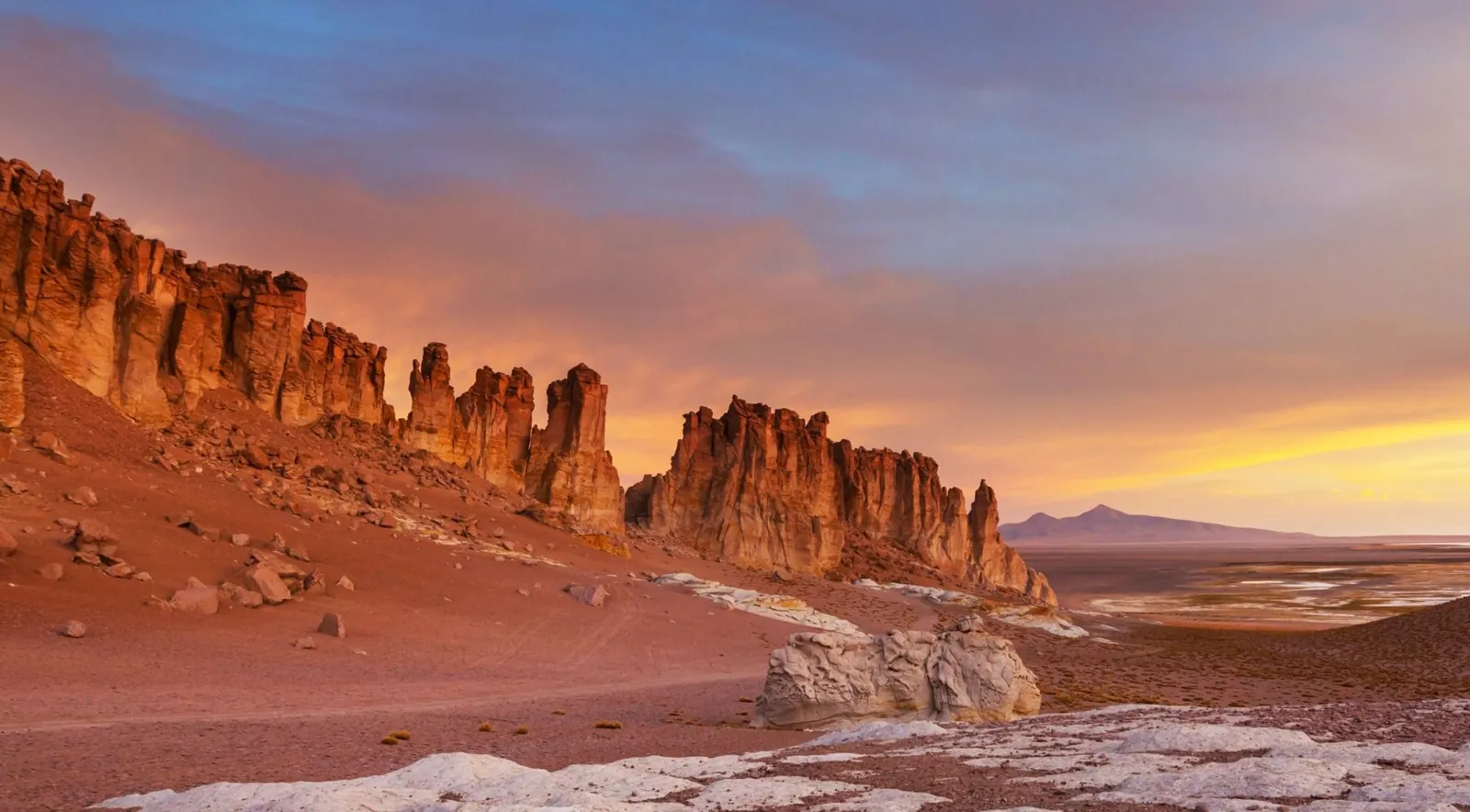
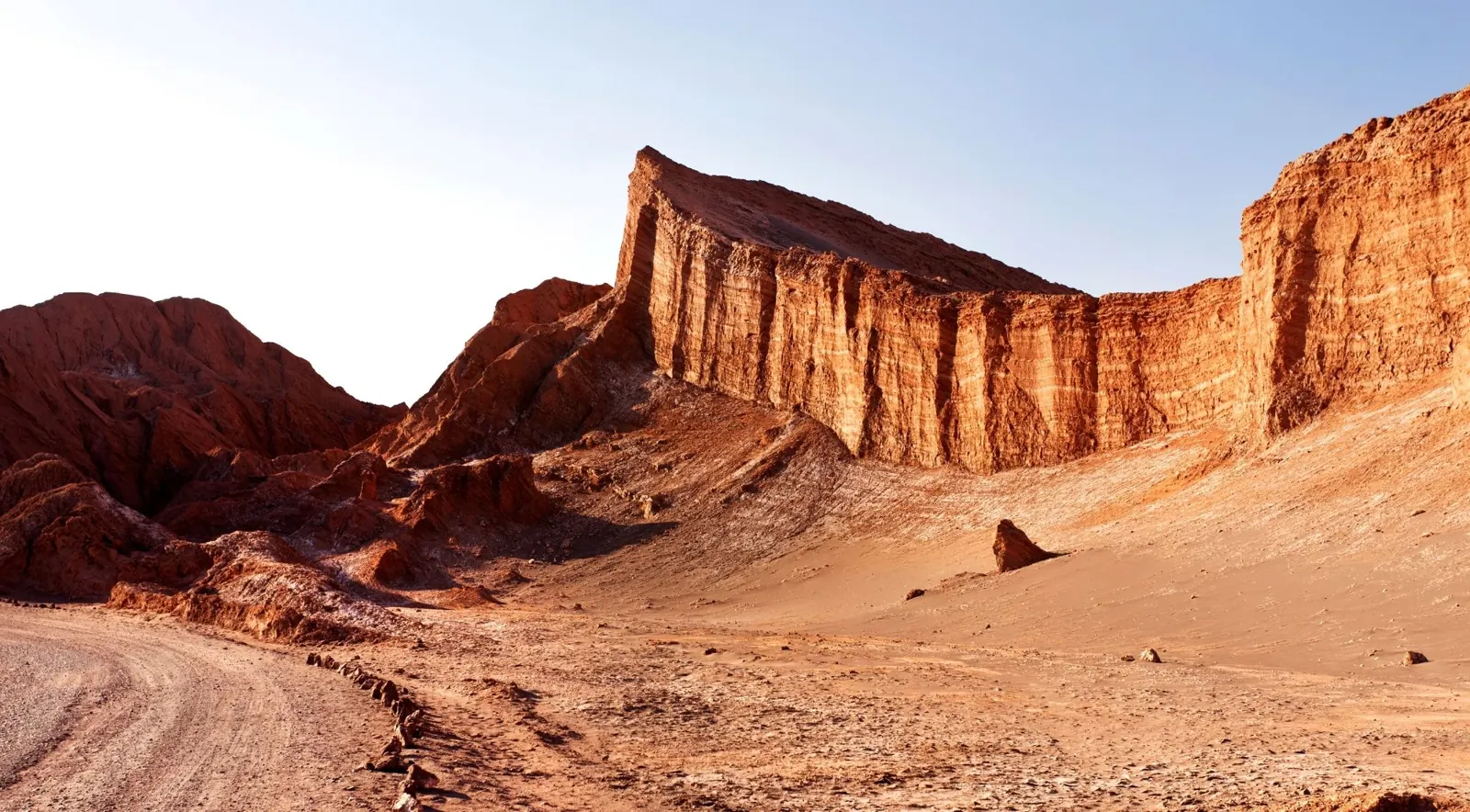
Valle de la Luna is a basin of eroded salt, gypsum and clay ridges in the Cordillera de la Sal, the salt range between San Pedro and the Salar de Atacama. Ancient salt lakes evaporated again and again, leaving thick layers of salt, gypsum and clay. Pressure from the rising Andes then folded and lifted those layers into ridges, and wind and the occasional rain carved them into dunes, cliffs, canyons and free-standing figures. The association that runs the site says these rocks began forming about 33 million years ago. The surface glitters with salt crystals, and on cool evenings the crust crackles as it contracts.
The name comes from the grey-white crust, the craters and the total absence of plants. The valley has been a Santuario de la Naturaleza since 1982 and forms part of the Reserva Nacional Los Flamencos.
Since the early 2000s, the Asociación Indígena Valle de la Luna has co-managed the site with CONAF, Chile’s forest and parks service. The association brings together six Lickanantay (Atacameño) communities: Coyo, Larache, San Pedro, Sequitor, Solor and Quitor. Your ticket money goes to the communities and the reserve.
Arrival-day planning
Moon Valley can suit the beginning of your visit because it avoids the major highland ascent of El Tatio. That does not mean you should book a tight flight-to-tour connection. Allow for baggage collection, the Calama transfer, checking in and getting to the meeting point.
If arrival timing is uncertain, use the first afternoon for settling in and put the tour on the following day. Heat, exposure and walking still matter, especially if you have just travelled overnight. The altitude guide explains how to order the higher trips after it, and a central bed from the where-to-stay guide puts the Tocopilla meeting point within walking distance.
What to bring and what to leave out
- Your ticket QR code saved offline, plus ID for any discount
- At least 2 litres of water per person
- Sunscreen, lip balm, sunglasses and a wide-brimmed hat
- Comfortable closed shoes with grip
- A windproof jacket and a warm layer for after sunset or an early start
- Snacks, because the included snack on one option does not replace planning dinner
- Cash if your operator collects the ticket money at its office
Leave the drone behind: the official rules prohibit drone flights. Keep to the marked paths to protect the fragile formations, and stay behind the barriers. One of the Tres Marías figures is reported to have been broken by a visitor who climbed it for a photo.
Safety and accessibility
There is no shade, and the sun is strong at this altitude, so cover up even on a cool day. The temperature drops fast after sunset. Wind carries grit along the ridges, and sunglasses and a buff help. With children, watch the drop around Mina Victoria and the soft sand on Duna Mayor.
The two products have different age and mobility restrictions. The cheaper shared listing excludes under-8s and over-70s as well as pregnant travellers and people with mobility impairments. The alternative has different listed limits, but an absent restriction does not prove an accessible route. The terrain is sandy and uneven; ask about the actual walking before booking, and contact the association if you need help on site.
Common complaints
| Complaint |
How to avoid it |
| “The trails closed before sunset.” |
Book a sunset tour, or go to Valle de Marte for sunset |
| “The tour promised Ckari, but it is closed.” |
Ask the operator where it watches sunset before you pay |
| “We could not buy a ticket at the gate.” |
Buy online in advance for your date |
| “The trails were packed in the late afternoon.” |
Go at opening time |
| “The valley was closed when we arrived.” |
Check the official notice for training days and weather closures |
| “The bike ride back was brutal.” |
Rent a good bike, start early and carry more water |
Pair it with a sensible evening
Reserve dinner time after you return. If you also want stargazing, confirm both schedules and the night-tour meeting point first. On a short trip, scheduling stargazing on another evening gives you more flexibility if clouds intervene. Our three-day itinerary shows how to avoid putting every highlight on the same day, and the full tour comparison shows what to book next.
Is Valle de la Luna worth it?
Yes, even with Ckari closed: the view from Duna Mayor is worth the ticket on its own. Take a tour if you have no car, travel solo or want a guided sunset without the logistics. Go on your own by car or bike if you prefer quiet trails and cooler air in the morning, then catch sunset at Valle de Marte. Check the official closure notice for your date before you book, because training days and weather closures can change at short notice.