When should you go?
For a first visit combining highland scenery and stargazing, we would choose April or May. The destination can be visited throughout the year, but weather may alter individual routes; no month guarantees that every excursion runs. April and May fall after the usual December–March highland summer-rain period and before the coldest winter nights.
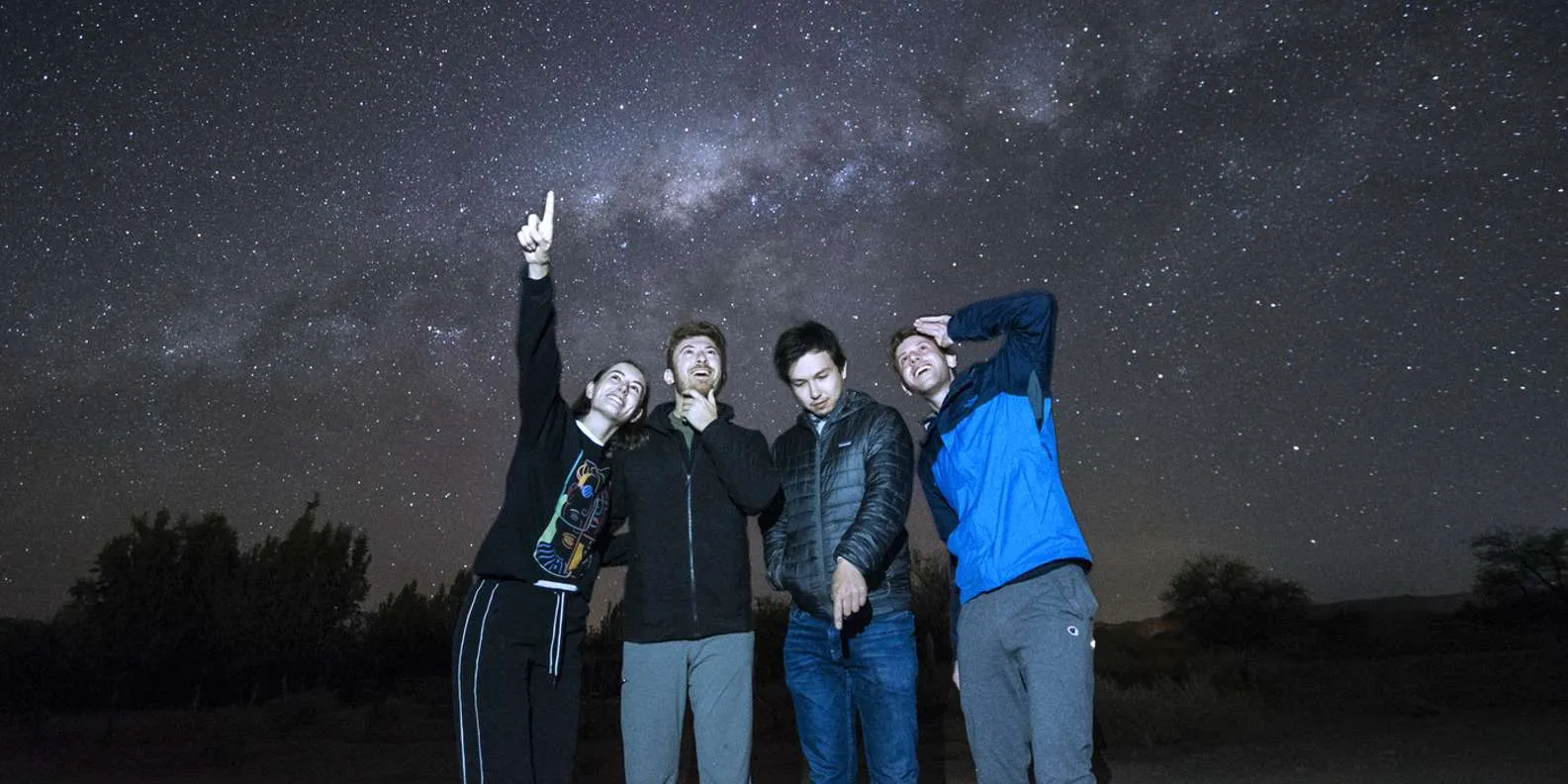
For astronomy, check the Moon and the actual observing time before choosing the date. A bright Moon can reduce faint-star visibility even on a clear night, while some tours offer Moon-and-planets viewing instead. If you have already booked summer dates, keep a spare day for highland route changes. In winter, bring substantial warm layers for dawn and night excursions.
Our April–May choice is an editorial recommendation within Chile Travel’s April–June advice. The useful reason is the change in highland conditions; we have not verified a monthly price or visitor-count series that would establish a cheapest or quietest month. For the wider picture, including the rare snow and the 2026 flowering desert far to the south, see our Atacama Desert travel guide.
Other experiences you might enjoy
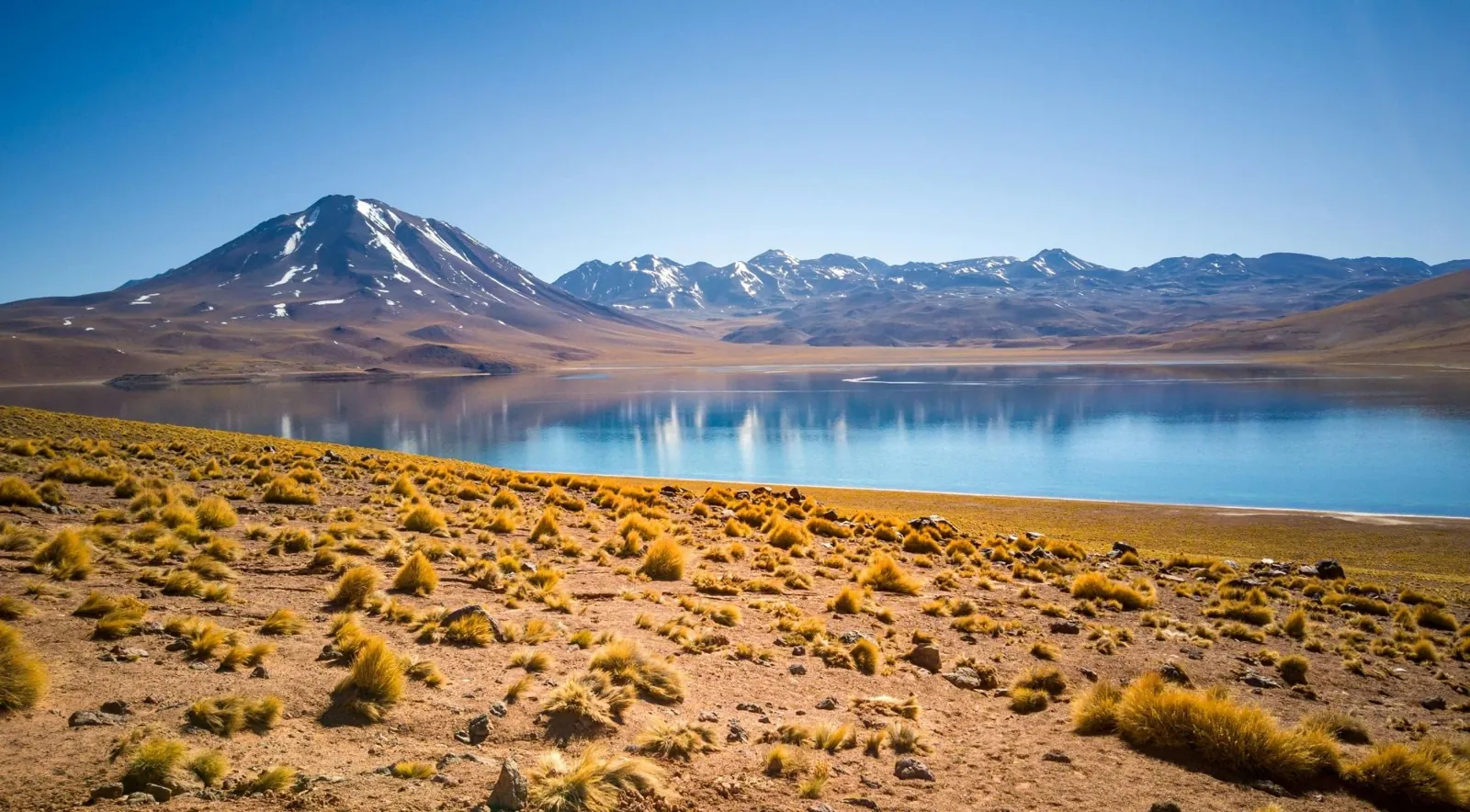
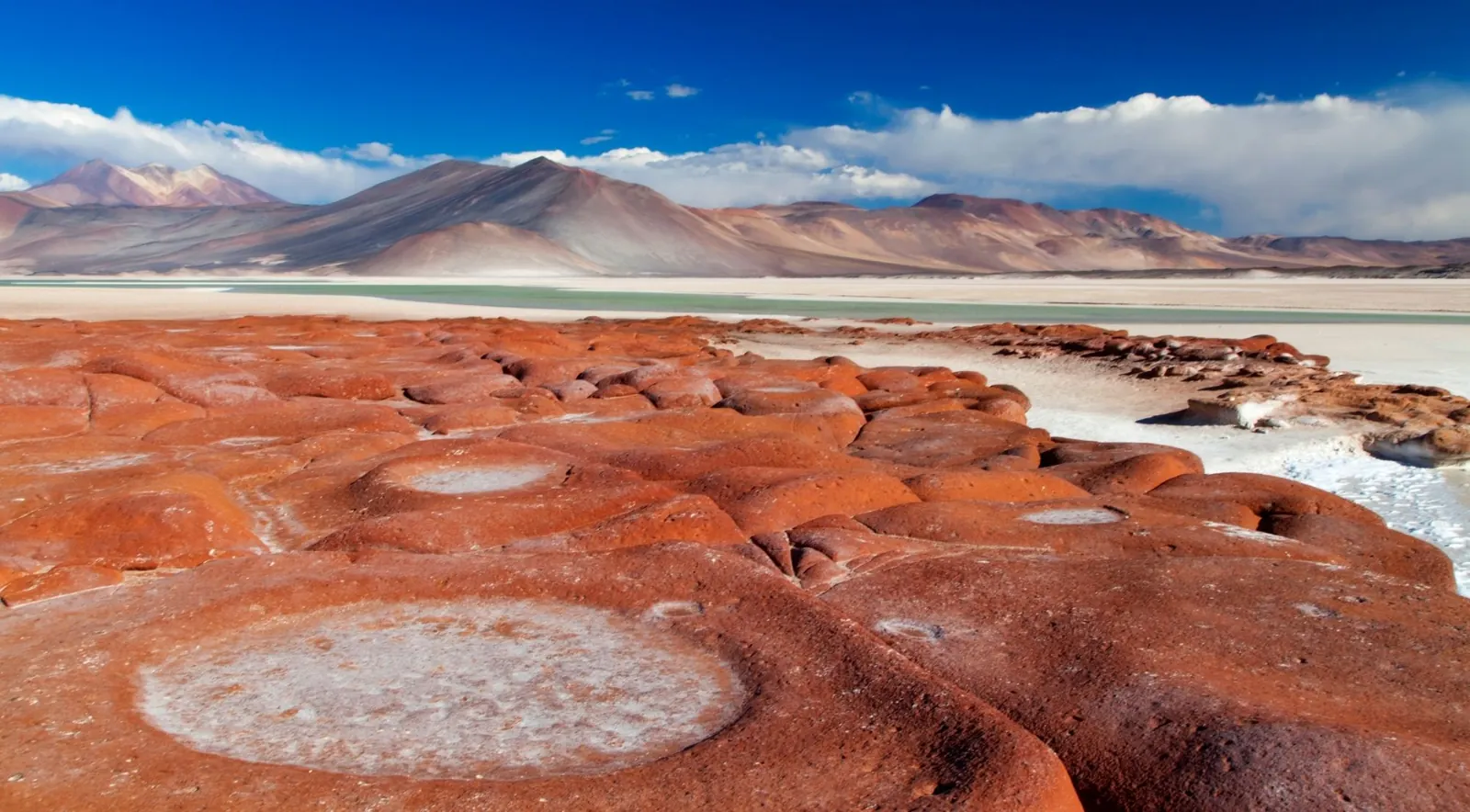
Whatever month you pick, compare sunset at Valle de la Luna, the sunrise El Tatio geysers, the Altiplanic lagoons and Piedras Rojas and an evening of stargazing near San Pedro.
Check your travel date
No month is closed, but the high trips carry the risk
You can visit San Pedro in any month. The town, Valle de la Luna and the salt lagoons near the Salar open most days of the year; the closures fall mainly on the trips that climb above about 4,000 metres, such as El Tatio, the Altiplanic lagoons and Piedras Rojas (see altitude by tour).
| Season |
Lower sites near town |
High-altitude trips |
What happened in 2026 |
| December–March |
Usually open; heavy rain can flood streets for a day |
Highland rain and storms can close roads and change routes |
On 23 January 2026 rain flooded several streets in San Pedro, and the national emergency service issued a preventive alert |
| April–May |
Usually open |
Our first choice for the core tours, though any route can still close for a day |
|
| June–August |
Usually open, with cold mornings and nights |
Snow can close El Tatio, the high lagoons and the border passes for days |
On 11 August Carabineros closed Route B-223 at Machuca because of snow; on 13 August the municipality said El Tatio, Miscanti and Miñiques, Piedras Rojas and Rainbow Valley were still closed while Cejar, Chaxa, Tebenquiche, Baltinache and the Pukará de Quitor had reopened |
| September–November |
Usually open |
Late snow and strong wind can still affect the highest routes |
|
The pattern matters most for a short stay. If El Tatio or Piedras Rojas is the reason for your trip, put it early in your stay after a lower day or two, so a closure still leaves you a second chance.
Wind
Wind affects comfort more than access on most days. Afternoons are often windier than mornings, so plan cycling, sandboarding and long walks in the morning and carry a windproof layer for the high plateau, where gusts feel much colder. If a strong wind or snow makes a high road unsafe, sites can close for the day.
El Niño in 2026
Chile’s weather service (DMC) said in its June 2026 climate bulletin that it expected a moderate to strong El Niño through the second half of 2026, possibly strong or very strong from September to November. The same bulletin notes that El Niño does not fully determine Chile’s weather, and it gives no forecast for the San Pedro summer, so plan the coming December–March as you would any other: with a spare day for the high trips.
Summer: December to March
Despite the desert’s dry reputation, high elevation can still get rain. Chile Travel describes the December–March “altiplanic winter” as a period when moist air can bring highland rain, storms and route closures. Operators may still run excursions, subject to the particular route and conditions.
For Piedras Rojas or El Tatio, ask about the actual route and keep a spare date where practical. A town forecast does not tell you what the high plateau is doing. If the operator changes the route, ask which stops remain and what refund or rescheduling conditions apply.
Autumn: April and May, then colder June
April and May are where we would start if you want the standard landscape mix and would rather not travel in the summer-rain period. They still require warm layers for early starts and nights. A lower chance of seasonal rain is not proof of safe roads, calm wind or clear astronomy conditions on a particular day.
Chile Travel’s recommendation extends into June. Treat June as a colder-night choice and pack accordingly, particularly for standing at telescopes or waiting for sunrise. Do not use a pleasant daytime temperature as your night-tour clothing guide.
Winter: June to August
Cold bites hardest on the two experiences where you spend time outside without moving much: stargazing and the dawn geyser visit. Insulating layers, wind protection and warm footwear matter. A blanket from the operator is a bonus and does not replace dressing properly.
Winter can still suit a landscape trip, but highland snow and road conditions may change access. Confirm conditions on the specific excursion route as well as the forecast for San Pedro.
Spring: September to November
Spring is a second period to consider for the core tour mix. Check the day’s wind and road conditions and pack warm night layers. We do not claim that every spring month has fewer visitors or lower prices; those choices depend on your actual travel dates and live room and tour quotes.
If photography is your priority, the departure and light can matter more than choosing one spring month over another. Compare a sunset Moon Valley tour with the predawn format of El Tatio; the light and departure times serve different experiences.
Month-by-month planning
| Month |
Main planning question |
Practical action |
| January |
Are summer storms affecting the highland route? |
Keep a flexible date and ask about substitutions |
| February |
Which plateau roads and reserves are accessible? |
Reconfirm the full route near departure |
| March |
Is highland summer weather still active? |
Keep the same route checks as earlier summer |
| April |
Does the selected trip fit your arrival and altitude plan? |
Compare the core routes and leave rest time |
| May |
Are you prepared for cold dawns and nights? |
Pack warm layers even for a sunny daytime forecast |
| June |
How cold will the actual highland or night stop be? |
Ask the operator about clothing and access |
| July |
Are cold, snow or road conditions changing departures? |
Check route status, not only the town forecast |
| August |
Is the advertised highland circuit running in full? |
Confirm the named stops and cancellation terms |
| September |
What are the departure times for the current season? |
Verify sunset and astronomy session timing |
| October |
Is wind affecting comfort or route access? |
Carry wind protection and check operator messages |
| November |
Does your astronomy date provide a dark session? |
Ask about Moon rise/set at observing time |
| December |
Are highland summer rains beginning to affect the route? |
Leave a spare day and confirm access |
Best time for each activity
| Activity |
When it works best |
What to plan around |
Our guide |
| Altiplanic lagoons and Piedras Rojas |
April–May for a first visit |
Highland storms from December to March; snow closures in winter |
Piedras Rojas tours |
| El Tatio geysers |
Any month; the steam is thickest on the coldest mornings |
Snow closures from June to August, storms from December to March, and a dawn below freezing all year |
El Tatio tours |
| Stargazing |
Any month on a dark, clear night; check the Moon first |
Cloud during the December–March highland rains, cold winter nights and tours that pause around full moon |
Stargazing tours |
| Valle de la Luna |
All year, at sunset |
Storm days and the ticket slot you book |
Moon Valley tours |
| Floating at Laguna Cejar |
Warm, calm afternoons |
Cold water and wind in winter |
Laguna Cejar tours |
| Puritama hot springs |
Any month; a soak feels best on a cold day |
Summer storm days and the two daily entry blocks |
Puritama guide |
| Cycling and sandboarding |
Mornings in any month |
Afternoon wind |
Things to do |
| Uyuni crossing |
The reflections need water on the salt flat, usually after the summer rains; drier months suit the full route |
Flooded tracks in the wet season and snow at the border in winter |
Uyuni tours |
Best time for stargazing is a separate decision
Darkness, moonlight and cloud influence the actual session. The featured astronomy tours last around two and a half hours, with outdoor observation and vehicle travel. A monthly recommendation cannot tell you which objects will be visible that evening.
SPACE, a separate local operator, does not run tours on the 7 nights around the full moon (checked October 2026). If those nights are your only free evenings, compare other stargazing tours. Llama’s selected listing instead offers stargazing or Moon-and-planets formats. Ask which experience you are booking, and whether the photograph or faint-object view you want is realistic on that date.
The date guide estimates the fraction of the Moon illuminated; it does not calculate whether the Moon is above the horizon during your session. Confirm that final detail with the astronomy provider. Reserve an earlier available evening in your stay when feasible, leaving another night as a possible alternative if conditions change.
Festivals, holidays and clock changes
San Pedro’s local festivals mix Catholic feast days with Atacameño tradition. The dates below are the ones the Corporación de Turismo San Pedro de Atacama publishes; ask locally for the programme, and before photographing a ceremony.
| Date |
Event |
| 2 February |
Fiesta de la Candelaria |
| Before Lent (February or March) |
Carnaval |
| 3 May |
Cruz de Mayo, with decorated crosses carried through the streets |
| 29 June |
Fiesta de San Pedro y San Pablo, the town’s patron-saint festival |
| 25 July |
San Santiago |
| 1–2 November |
Mesa de los difuntos, when families set offering tables for the dead |
National holidays such as Easter (28 March in 2027), Fiestas Patrias on 18 and 19 September and the long weekend around 12 October are times when many Chileans travel, so book rooms and tours earlier if your dates overlap.
Mainland Chile, including San Pedro, moved its clocks back one hour on 4 April 2026 and forward one hour on 5 September 2026. The current decree sets the next change back for the night of Saturday 3 April 2027. If a predawn pickup falls the morning after a change, confirm the time with your operator.
Best time by type of traveller
- First visit: April or May, our headline choice, for the standard landscape mix with fewer storm closures.
- Stargazers: any month, chosen by the Moon; winter nights are long but cold, and December–March cloud can cancel sessions.
- Families: the school holidays fit children’s calendars, but El Tatio admits no one under 9 in any month, so check age rules before you pick the dates.
- Photographers: winter for snow on the volcanoes, if you can accept closures; the clear months either side for steadier access.
- Short stays: avoid relying on one high-altitude day in December–March or June–August; leave a spare day.
What to pack by season
| Season |
Add to the basics |
| All year |
Sunscreen, lip balm, sunglasses, a hat, a refillable bottle and warm layers for dawn and night tours |
| December–March |
A light rain jacket and quick-drying clothes, plus a spare day in your plan |
| April–May and September–November |
A down or synthetic jacket and a fleece for early starts |
| June–August |
Full winter kit for dawn and night: thermal layers, a down jacket, a windproof shell, insulated gloves, warm socks and a hat |
The packing list covers each tour in more detail.
What if your dates are already fixed?
Choose your route and packing around the conditions you can check. Summer visitors can keep a spare day for highland changes. Winter visitors can prioritise proper cold-weather clothing. Travellers on bright-moon dates can compare a lunar-focused session and ask which objects are likely to be visible.
Use the three-day or four-day plan to separate late nights from early starts. The longest day tour is not automatically the best choice when time or comfort is limited. Compare inclusions and cancellation terms before completing the reservation.
If weather closes a site, ask the operator which stops remain and whether you get another date, a refund or a substitute stop. In the December–March and June–August months, choose refundable bookings and keep one or two days free. For the latest closures, ask at the Sernatur tourist office on the plaza or check the municipality’s announcements on the morning of the trip.
How we know: sources and limitations
We checked these sources on 9 October 2026. Chile Travel’s seasonal guide recommends April–June and describes the December–March highland rain period. Its destination guide adds context on cold and advance planning. Our April–May preference is an editorial choice within that wider recommendation, for travellers combining highland scenery and outdoor astronomy.
Astronomy schedules are operator-specific. We compared SPACE’s published star-tour information with the Llama experience, whose listing describes a Moon-and-planets variation. We do not have a regional monthly crowd or price series, and these sources cannot tell you whether a particular road will be open on your date.
The date guide uses a mean 29.530588853-day lunar cycle from a reference new Moon on 6 January 2000. It estimates illumination at noon UTC; it does not calculate local Moon rise/set or correct for every variation in lunar motion. These limitations matter when choosing an actual observing session. It is not a forecast, and neither its seasonal advice nor its Moon estimate confirms departure availability.
On 21 October 2026 we added the closure, festival and clock-change material from these sources. The 2026 closures come from press reports: T13 on the 23 January rain, Calama en Línea on the 11 August closure of Route B-223 and G5 Noticias on the municipality’s 13 August site list. The El Niño note is from the DMC’s June 2026 climate bulletin. Festival dates are from the Corporación de Turismo San Pedro de Atacama. The clock changes follow the Interior Ministry’s Decree 98, as reported by Meganoticias. The El Tatio age rule is from the El Tatio fee page. We publish no monthly temperature, rainfall, price or occupancy figures, because we found no official series for San Pedro.