How high is San Pedro de Atacama?
San Pedro de Atacama sits at about 2,400 metres (7,900 ft). The commonly cited figure is 2,407 m; other sources give 2,436–2,450 m, and the town’s small airstrip is listed at 2,426 m. The oasis slopes gently down towards the Salar de Atacama, so the number depends on where you stand. That is about 280 m higher than Juf, the highest permanently inhabited village in the Alps, and about 800 m higher than Denver.
| Fact |
Answer |
| San Pedro de Atacama |
About 2,400 m / 7,900 ft (sources give 2,407–2,450 m) |
| Calama city |
About 2,260 m / 7,410 ft |
| Calama El Loa airport (CJC) |
About 2,326 m / 7,631 ft |
| El Tatio geysers |
About 4,320 m / 14,170 ft |
| Highest stop on standard tours |
Sol de Mañana in Bolivia, on the Uyuni crossing, about 4,900 m / 16,100 ft |
| Highest guided summit day |
Cerro Toco, 5,604 m / 18,386 ft |
| Where altitude illness risk starts |
Sleeping at 2,450 m (8,000 ft) or above, sometimes lower (CDC) |
| Air pressure in town |
About 75% of sea level |
| Extra UV |
About 10% per 1,000 m (WHO): roughly a quarter more in town, over 40% more at El Tatio |
| Water boils at |
About 92 °C in town and 86 °C at El Tatio |
| Emergency numbers in Chile |
131 ambulance (SAMU), 133 police (Carabineros), 132 fire |
Is that high altitude? Technically, yes. The CDC Yellow Book puts any unacclimatised traveller sleeping at 2,450 m or above, “and sometimes lower”, at risk, and San Pedro sits right on that line. On your first night expect a mild headache, shorter breath on stairs and so-so sleep, not serious illness.
Calama, where you land, is at about 2,260 m, and the El Loa airport is listed at 2,326 m (some aviation databases give 2,299 m). A two-hour flight from Santiago takes you from near sea level to above 2,000 m, which is why your arrival day should be easy. The Calama airport transfer guide and getting there cover the trip into town.
Lower-altitude trips for your first days
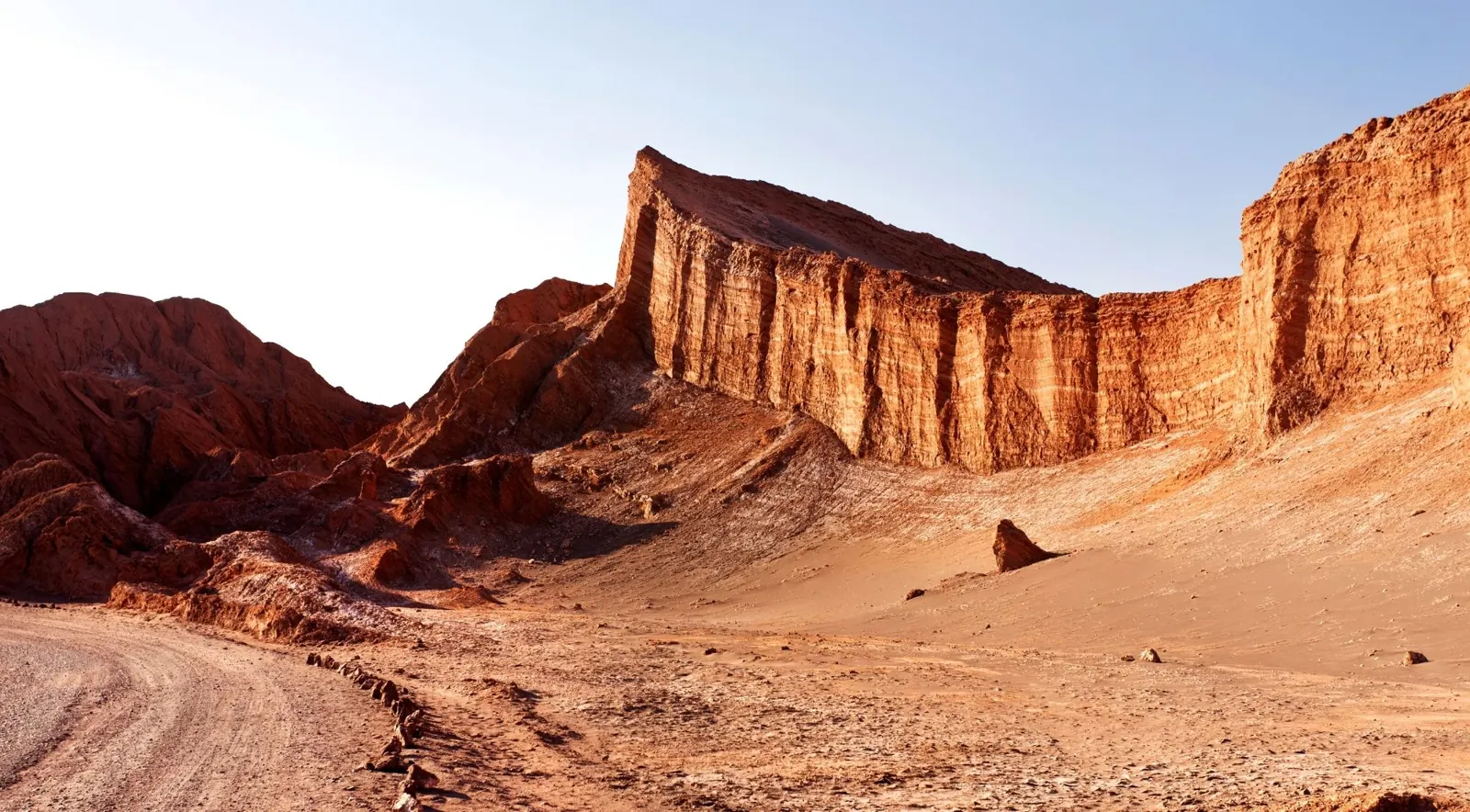
For the first 48 hours, stay close to town altitude: sunset at Valle de la Luna, floating at Laguna Cejar, the Baltinache lagoons and a night of stargazing all stay around 2,300–2,500 m.
The town and the excursions are different exposures
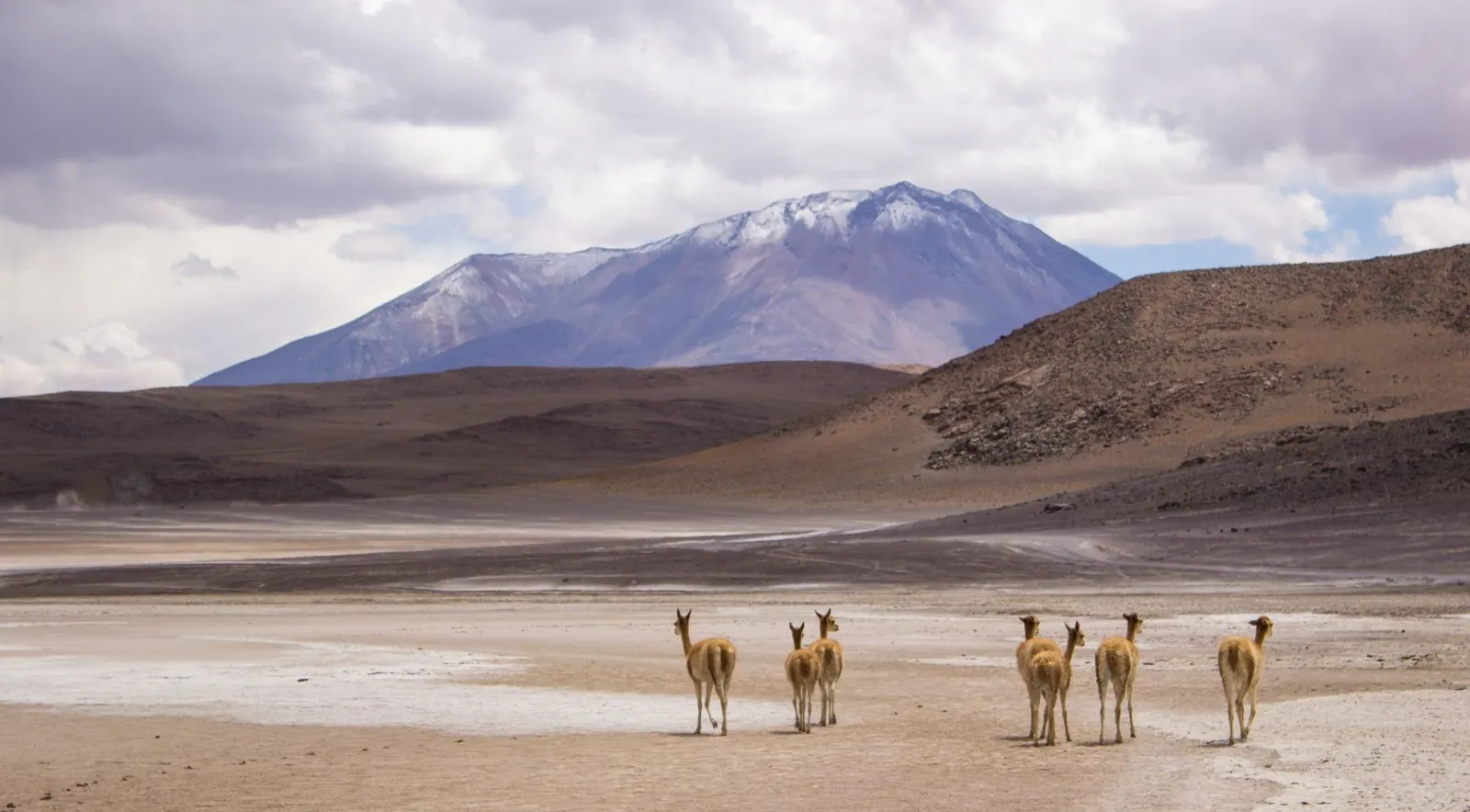
Staying in San Pedro does not put every tour at the same elevation. The featured Piedras Rojas listings describe stops at about 4,200 metres, and the El Tatio listing places the geyser field above 4,300 metres. The Uyuni crossing reaches about 4,900 metres at Sol de Mañana and includes overnight stays in the Bolivian highlands. Conditions on these high days also vary by season, so check the best time to visit before you fix the order.
Will you get altitude sickness? Probably not badly in town, but quite possibly on the high tours. The CDC calls acute mountain sickness (AMS) “the most common form of altitude illness, affecting, for example, 25% of all visitors sleeping at altitudes >2,450 m (>8,000 ft) in Colorado.” San Pedro sits at that threshold, so mild symptoms on night one are common and serious illness in town is rare.
Most Atacama trips follow a pattern that helps:
- You sleep low and visit high. The CDC notes that “hypoxemia is greatest during sleep; day trips to high-altitude destinations with an evening return to a lower altitude are much less stressful on the body.” The usual tour pattern builds “climb high, sleep low” into your trip.
- The climbs are fast. El Tatio takes you from 2,400 m to about 4,320 m before sunrise, often after a short night and in temperatures well below freezing.
- The Uyuni crossing is the exception. It sleeps high, at about 4,200–4,300 m near Laguna Colorada, or above 3,600 m on other routings. Going from Chile into Bolivia is the harder direction for altitude. The Uyuni guide covers the routes.
A daytime ascent followed by a return to a lower bed differs from sleeping high. The CDC Yellow Book explains why sleeping altitude and the rate of ascent matter. Do not apply a sleeping-altitude guideline as if it were a guarantee for a rapid daytime excursion.
| Plan |
What to consider |
| San Pedro arrival |
You may already notice the change from sea level; keep the first activities light |
| Moon Valley |
A lower-desert alternative to the major highland trips, but still sun and walking exposure |
| Piedras Rojas |
A long day with high stops and exposed walking |
| El Tatio |
A rapid early ascent, cold dawn conditions and product-specific restrictions |
| Uyuni expedition |
High day visits plus remote overnight stays; needs a separate assessment |
Who gets it? The CDC says susceptibility is partly genetic and that “training and physical fitness do not affect risk.” Children are as susceptible as adults, and people over 50 have slightly less risk. Your best predictor is how you reacted before at a similar altitude and rate of ascent.
Altitude by site and tour
Levels used below: low means close to town altitude; moderate is 3,000–3,900 m; high is 4,000–4,500 m; very high is above 4,500 m.
| Site |
Altitude (m) |
Altitude (ft) |
Level |
Notes |
| Laguna Cejar and Laguna Piedra |
About 2,300–2,335 |
About 7,550–7,660 |
Low |
The floating lagoon on the salt flat; see the Cejar guide |
| Laguna Tebinquiche |
About 2,300 |
About 7,550 |
Low |
Sunset stop on the Cejar circuit |
| Laguna Chaxa (Salar de Atacama) |
About 2,300 |
About 7,550 |
Low |
Last stop of many lagoon days; the salt flat averages about 2,300 m |
| Baltinache hidden lagoons |
About 2,300–2,500 |
About 7,550–8,200 |
Low |
See the Baltinache guide |
| Aldea de Tulor |
About 2,450 |
About 8,040 |
Low |
Archaeological site, half a day |
| San Pedro town |
About 2,400 |
About 7,900 |
Low |
Your sleeping altitude |
| Toconao |
About 2,485 |
About 8,150 |
Low |
Stop on the lagoons day |
| Pukará de Quitor |
About 2,500 |
About 8,200 |
Low |
Short, steep climb to the viewpoint |
| Valle de la Luna |
About 2,490–2,520 |
About 8,170–8,270 |
Low |
An easy first afternoon; see the Moon Valley guide |
| Valle de la Muerte (Valle de Marte) |
About 2,500–2,600 |
About 8,200–8,500 |
Low |
Sandboarding here is real exertion |
| ALMA Operations Support Facility |
About 2,900 |
About 9,510 |
Low to moderate |
ALMA’s public visits are currently suspended |
| Yerbas Buenas petroglyphs |
About 3,100 |
About 10,200 |
Moderate |
Usually paired with Rainbow Valley |
| Valle del Arcoíris (Rainbow Valley) |
About 3,200–3,500 |
About 10,500–11,500 |
Moderate |
Operators and guides give figures in this range |
| Socaire |
About 3,200–3,300 |
About 10,500–10,800 |
Moderate |
Village stop on the lagoons day |
| Termas de Puritama |
About 3,500 |
About 11,500 |
Moderate |
A good step-up day; see the Puritama guide |
| Piedras Rojas (Salar de Aguas Calientes) |
About 4,000–4,200 |
About 13,100–13,800 |
High |
See the Piedras Rojas guide |
| Laguna Tuyajto |
About 4,000 |
About 13,100 |
High |
Only on extended lagoon days |
| Machuca village |
About 4,000 |
About 13,100 |
High |
El Tatio return stop; one source gives 3,814 m |
| Monjes de la Pacana |
About 4,100 |
About 13,450 |
High |
The route crosses passes at about 4,800 m |
| Lagunas Miscanti and Miñiques |
About 4,120–4,160 |
About 13,500–13,650 |
High |
Usually the highest walk of the lagoons day |
| Paso de Jama (Argentina border) |
4,200 |
13,800 |
High |
Route 27 tops out at about 4,830 m |
| Vado Putana wetland |
About 4,250–4,300 |
About 13,950–14,100 |
High |
El Tatio return stop |
| Laguna Colorada (Bolivia) |
4,278 |
14,035 |
High |
Usual overnight area on the Uyuni crossing, about 4,200–4,300 m |
| Laguna Verde (Bolivia) |
About 4,300 |
About 14,100 |
High |
Uyuni crossing, day 1 |
| Salar de Tara |
About 4,300 |
About 14,100 |
High |
Closed to visitors since June 2018 by CONAF and the Toconao community, reported still closed in 2023 |
| El Tatio geysers |
About 4,320 |
About 14,170 |
High |
The fastest big climb from town; see the El Tatio guide |
| Hito Cajón (Chile–Bolivia border) |
4,480 |
14,700 |
High |
About 2,000 m above town in about 45 km |
| Sol de Mañana geysers (Bolivia) |
About 4,900 |
About 16,100 |
Very high |
Highest point of the standard Uyuni crossing |
| Chajnantor plateau (ALMA array) |
About 5,000–5,050 |
About 16,400 |
Very high |
Not open to visitors |
| Láscar summit |
5,592 |
18,346 |
Very high |
Active volcano; access varies with its activity |
| Cerro Toco summit |
5,604 |
18,386 |
Very high |
Guided day climb from a trailhead at about 5,000 m |
| Licancabur summit |
5,916 |
19,409 |
Very high |
Expedition, usually from Bolivia |
| Sairecabur summit |
5,971 |
19,590 |
Very high |
Some operators quote about 6,040 m |
| Salar de Uyuni and Uyuni town |
3,656 |
11,995 |
Moderate |
End of the Uyuni crossing |
Most altitudes for natural sites are rounded and change with where you measure. Figures marked “about” come from operator, mapping or encyclopaedic sources, not official surveys.
Here is how the main bookable trips line up from low to high:
- Day 1, about 2,500 m: the Valle de la Luna Shared Sightseeing Tour (4.7/5 from 366 reviews) goes out for sunset and returns you to town the same evening.
- Low and gentle, about 2,300 m: the Laguna Cejar floating tour on Viator (5.0/5 from 80 reviews) and the Baltinache Hidden Lagoons excursion (4.5/5 from 146 reviews) both stay on the salt flat.
- Night, close to town altitude: the Llama Stargazing Experience (4.7/5 from 814 reviews) is an evening outside town, so book an early slot before a dawn trip.
- Step up to about 3,500 m: the Rainbow Valley Tour on Viator (4.7/5 from 35 reviews), or the Puritama hot springs, which have no well-reviewed tour listing yet, so buy the official pool entry and arrange transport.
- High, about 4,200 m: the Piedras Rojas, Altiplanic Lagoons & Salar Full-Day Tour (4.7/5 from 834 reviews) reaches Miscanti, Miñiques and Piedras Rojas.
- High and fast, about 4,320 m: Tatio Geysers at Sunrise (4.7/5 from 1,151 reviews) collects you before dawn.
- Highest and sleeping high, about 4,900 m: the 4-Day Uyuni Salt Flats Tour (4.5/5 from 88 reviews) should come last.
How San Pedro compares with famous high places
| Place |
Altitude |
Compared with San Pedro (about 2,400 m) |
| Denver, USA |
About 1,609 m |
San Pedro is about 800 m higher |
| Juf, Switzerland (highest permanently inhabited village in the Alps) |
2,126 m |
San Pedro is about 280 m higher |
| Machu Picchu, Peru |
About 2,430 m |
About the same |
| Vail, Colorado |
2,480 m |
About the same |
| Breckenridge, Colorado |
2,925 m |
About 500 m higher than San Pedro |
| Cusco, Peru |
About 3,350–3,400 m |
About 1,000 m higher |
| La Paz, Bolivia |
About 3,650 m |
About 1,250 m higher, close to Uyuni |
| Jungfrau summit, Switzerland |
4,158 m |
El Tatio is about 160 m higher |
| Pikes Peak, Colorado |
4,302 m |
El Tatio is slightly higher |
| Matterhorn summit |
4,478 m |
Hito Cajón (4,480 m) is about level |
| Mont Blanc summit |
About 4,806 m |
Sol de Mañana is a little higher; El Tatio is about 490 m lower |
| Everest Base Camp, Nepal |
About 5,364 m |
Cerro Toco’s summit is about 240 m higher |
| Kilimanjaro summit |
About 5,895 m |
Licancabur is about the same |
You may read that El Tatio is higher than Mont Blanc. It is not: Mont Blanc is about 4,806 m and El Tatio about 4,320 m. El Tatio is higher than the Jungfrau and Pikes Peak, and on the Uyuni crossing Sol de Mañana sits at about the height of Mont Blanc’s summit.
AMS, HAPE and HACE explained simply
| Condition |
What it is |
Key symptoms |
What to do |
| AMS (acute mountain sickness, soroche or puna) |
Your body has not yet adjusted to less oxygen. Common and usually mild. |
A headache plus one or more of nausea, loss of appetite, dizziness or fatigue. The CDC says it “feels like a hangover”. It usually starts 2–12 hours after arrival or ascent. |
Do not go higher. Rest, use simple painkillers and skip the next high tour. It usually clears in 12–48 hours; descending 300 m or more helps quickly. |
| HACE (high-altitude cerebral edema) |
Swelling of the brain, the end stage of AMS. Rare below 4,300 m. |
Confusion, stumbling or poor balance (ataxia), drowsiness, as if drunk |
Emergency. Descend immediately and get oxygen and medical care. Without treatment, coma can follow within 12–24 hours of ataxia. |
| HAPE (high-altitude pulmonary edema) |
Fluid in the lungs. Affects up to 1 in 100 travellers above 4,300 m (CDC). |
Breathlessness out of proportion to effort, then breathlessness at rest, cough, chest congestion, sometimes pink or bloody sputum |
Emergency. Descend urgently and get oxygen. It can kill faster than HACE. |
A new headache after ascent, particularly with nausea, dizziness, fatigue or reduced appetite, may be AMS. Tell your guide and do not go higher while symptoms continue. Get a medical assessment, and do not put symptoms down to a lack of fitness.
The CDC’s three rules that prevent deaths:
- Know the early symptoms and admit when you have them.
- Never go up to sleep higher with symptoms, however mild. In San Pedro terms, do not start the Uyuni crossing or a volcano climb with a headache.
- Descend if symptoms get worse despite rest or treatment.
The Lake Louise score is what clinicians and researchers use: four symptoms (headache, stomach upset, fatigue or weakness, dizziness) scored 0–3 each. A recent ascent, a headache and a total of 3 or more suggest AMS. Use it as a self-check, not a diagnosis.
Get help now, and call 131, if you or a companion has:
- confusion, slurred speech or cannot walk a straight heel-to-toe line
- breathlessness at rest, or a rattly, wet cough
- a severe headache that painkillers do not touch, or repeated vomiting
- unusual drowsiness or a change in behaviour
Remote excursions can be far from care, so know how your operator communicates and responds. Do not wait to see whether tomorrow’s itinerary feels easier.
Build the itinerary with room to adjust
Start with easier activities around the lower desert and put the highest excursions later. Stay near 2,400–2,600 m for the first 48 hours, step up to about 3,500 m, then go to 4,000 m and above. The CDC notes that two to three nights at about 2,450–2,750 m before going higher is “markedly protective” against AMS, and San Pedro sits at the bottom of that band. Avoid heavy exertion and alcohol while you adjust, sleep, eat normally and carry water.
The three-day itinerary gives you a choice of one major highland trip, while the four-day plan separates two. Neither is medical clearance, and the how many days guide explains the trade-offs. The plans below show only the altitude logic.
Three days: choose one high tour
| Day |
Morning |
Afternoon or evening |
Highest point |
| 1 |
Arrive from Calama, rest, stroll the village |
Valle de la Luna at sunset |
About 2,500 m |
| 2 |
Laguna Cejar or Pukará de Quitor |
A stargazing tour |
About 2,500 m |
| 3 |
El Tatio before dawn, or the altiplanic lagoons |
Rest and pack |
About 4,320 m |
El Tatio on day 3 means only two nights in town, which is the minimum. Go easy and skip alcohol the night before, and if you stargaze on night 2, choose an early slot.
Four days: our recommended minimum
| Day |
Plan |
Highest point |
| 1 |
Arrive, village, Valle de la Luna at sunset |
About 2,500 m |
| 2 |
Laguna Cejar and Tebinquiche at sunset, or stargazing |
About 2,300 m |
| 3 |
Puritama hot springs, or Rainbow Valley and Yerbas Buenas |
About 3,500 m |
| 4 |
El Tatio geysers with Machuca and Vado Putana |
About 4,320 m |
Five days: the best balance
| Day |
Plan |
Highest point |
| 1 |
Arrive, Valle de la Luna |
About 2,500 m |
| 2 |
Cejar and Tebinquiche, stargazing |
About 2,300 m |
| 3 |
Puritama or Rainbow Valley |
About 3,500 m |
| 4 |
Altiplanic lagoons, Piedras Rojas and Chaxa |
About 4,200 m |
| 5 |
El Tatio geysers |
About 4,320 m |
Planning the Uyuni crossing or Cerro Toco? Put them last, after a 4,000 m day without symptoms. Cerro Toco (5,604 m) only makes sense after several high days, and the tours guide covers the climb.
Arriving from Bolivia or Peru? If you have spent several days around 3,500 m or higher (Cusco, La Paz, Uyuni), you are already acclimatised. You can do El Tatio early, and San Pedro will feel like a holiday from altitude. Acclimatisation fades over days to weeks back at low altitude, so this only works if you came straight from altitude.
Prevention checklist
- Order your tours from low to high, as in the plans above. It is the most effective thing you can do.
- Skip alcohol for the first 48 hours (CDC). Pisco sours hit harder up here, and alcohol depresses breathing during sleep.
- Keep your usual caffeine. The CDC advises regular users to carry on, to avoid a withdrawal headache you might mistake for AMS.
- Keep exercise mild for 48 hours. Save sandboarding, long bike rides and any volcano climb for later.
- Drink to thirst, not to excess. The Wilderness Medical Society 2024 guidelines say “‘forced hydration’ or ‘overhydration’ have never been shown to prevent altitude illness and might increase the risk of hyponatremia”. Desert air still dries you out, and dehydration feels a lot like AMS.
- Eat light, carbohydrate-friendly meals before high tours. Many include breakfast at altitude.
- Sleep. El Tatio pickups run about 04:30–05:10, and short nights make you feel worse.
- Use any recent altitude you have. The CDC Yellow Book says “a high-altitude exposure (>2,750 m; >9,000 ft) for ≥2 nights, within 14 days before the trip, is useful but closer to the trip departure is better.”
- Never ascend with symptoms. Swap the high tour for a low one; ask your operator about moving the date.
Fitness does not make you immune
Strong hiking fitness is not a reliable shield against altitude illness. A short walk at a high stop may feel unexpectedly difficult even if you exercise regularly. Earlier trips to altitude tell you something, but they do not guarantee the same response on a faster or higher itinerary.
Talk with a clinician familiar with altitude travel before departure if you have relevant heart, lung or other medical conditions, have previously had serious altitude problems, are pregnant, or are considering preventive medication. Medication decisions and dosing belong in that consultation, not in a tour booking form.
Medications: what the evidence says
This is not medical advice. Discuss any medication with your doctor or a travel clinic before you travel, especially if you take other medicines or have health conditions. The doses below are the ones published in CDC and Wilderness Medical Society guidance, listed so you know what to ask about.
| Medication |
Role |
Published dose (CDC/WMS) |
Key notes |
Availability |
| Acetazolamide (Diamox) |
Prevention, with the best evidence; also treats AMS |
125 mg every 12 hours, from the day before ascent through the first two days at altitude; 250 mg twice daily as treatment |
Tingling fingers and toes, more urination, fizzy drinks taste flat. It shortens the usual 3–5 days of acclimatisation to about one. The CDC says a cross-reaction with sulfa antibiotic allergy “has not been reported”, but take care with a history of anaphylaxis or several drug allergies. |
Prescription in the US and UK, and a prescription (receta médica simple) in Chile; stock in Chilean pharmacies can be patchy |
| Ibuprofen |
Prevention alternative; headache relief |
600 mg every 8 hours |
Less effective than acetazolamide (the WMS cites two positive trials and one smaller trial with no benefit). Take with food; avoid with stomach or kidney problems. |
Over the counter |
| Paracetamol (acetaminophen) |
Headache relief |
500 mg every 8 hours (CDC example) |
Treats symptoms, does not prevent them |
Over the counter |
| Ondansetron |
Nausea |
4 mg dissolving tablet |
Symptom relief |
Prescription in most countries |
| Dexamethasone |
Treatment of moderate to severe AMS or HACE |
4 mg every 6 hours (AMS) |
Not for routine tourist prevention; a rescue drug for remote or high-risk trips, carried on a doctor’s advice |
Prescription |
| Nifedipine |
HAPE prevention and treatment in susceptible people |
30 mg slow-release every 12 hours |
Only for people who have had HAPE before, on medical advice |
Prescription |
When does acetazolamide make sense for an Atacama trip? By the CDC risk table, sleeping at San Pedro’s altitude on day one is low risk, and for low-risk travellers prophylaxis “is not indicated”, although carrying it to treat early AMS is reasonable. Ask your clinician about prevention if you have had moderate or severe AMS before, if you are doing the Uyuni crossing (sleeping at 4,200 m or higher), or if you plan to climb Cerro Toco or Licancabur. Get it at home before you fly: pharmacies in Santiago and the north do not always stock it, and you need a prescription.
Coca leaves, coca tea and local herbal remedies
- Coca is illegal in Chile. Coca leaf (“coca, hoja de”) is listed as a controlled substance in the regulations to Ley 20.000 (Decreto 867). A 2025 legal analysis by Fundación Lobeliana, published by TNI, confirms that Chilean law treats coca leaf as a drug even though it is commonly sold informally in the north. A bill to legalise dry coca leaf for traditional use (Boletín N° 16381-25, registered on 20 October 2023) was still in its first constitutional stage, with little sign of approval, when that paper came out. We do not recommend buying or carrying coca in Chile.
- Coca leaf and coca tea are legal in Bolivia and Peru, but do not carry them into Chile or home. Border checks at Hito Cajón and at home airports treat coca as a narcotic, and Chile’s SAG also restricts plant products at the border.
- In a 2006 study, all five volunteers who drank coca tea tested positive for the cocaine metabolite benzoylecgonine within two hours, and three of the five were still positive at 36 hours. Anyone facing workplace or sports testing should avoid it.
- There is no good clinical evidence that coca tea prevents AMS. It is a mild stimulant and a comforting ritual, not a substitute for a slow ascent.
- Chachacoma and rica-rica are local Andean herbs often served as infusions in San Pedro. They are legal, pleasant and part of local culture, but there is no robust clinical evidence that they prevent altitude sickness.
Oxygen cans and pulse oximeters
Many El Tatio and lagoon operators carry an oxygen cylinder; ask when you book. That is real medical oxygen and it helps in an emergency. The handheld oxygen cans sold in pharmacies and shops hold “5 L at most” and give only “brief relief”, according to the CDC. They are fine for comfort but no substitute for descending, and “oxygen included” on a listing is not a guarantee that a rapid ascent suits you.
Pulse oximeters cost under US$30, according to the CDC, and can help you track acclimatisation. At about 3,050 m, a saturation of 88–91% is normal on arrival, so expect high 80s to low 90s in San Pedro and lower at El Tatio. Cold fingers, nail polish and movement all affect the reading, and how you feel matters more than the number. With HAPE, readings of 50–70% are common, at least 10 points below healthy people at the same altitude.
If symptoms appear
- A mild headache or nausea on a tour: tell your guide, sit down, breathe slowly, sip water and use oxygen if it is offered. Most high tours bring you back down to about 2,400 m within hours.
- Mild AMS in town: rest, take ibuprofen or paracetamol, skip alcohol and postpone the next high tour. If you are no better, or worse, after 24 hours, see a doctor.
- Red flags (confusion, stumbling, breathlessness at rest): this is an emergency. Get down, get oxygen and call 131 for the SAMU ambulance.
Medical care near San Pedro:
- CESFAM San Pedro de Atacama is the public family health centre, with an emergency unit. It coordinates with the rural health posts in Toconao, Peine, Socaire and Río Grande.
- Hospital Dr. Carlos Cisternas in Calama is the regional public hospital, about 100 km and 1.5 hours away, and receives transfers from San Pedro.
- Clínica Andes Salud El Loa in Calama is a private clinic with an emergency department.
- Check that your travel insurance covers altitude without an exclusion below your planned maximum. Some policies exclude anything above 3,000–4,500 m, or “mountaineering”, which may catch Cerro Toco. It should also cover medical evacuation from remote areas, including Bolivia if you are doing the Uyuni crossing.
Product restrictions and special groups
The El Tatio park’s own fee page sets the site rules: children aged 0–8 are not admitted, pregnant visitors are not permitted, visitors over 60 should tell staff, and the visit is not recommended for people over 70. The featured El Tatio tour adds its own, stricter limit and excludes under-9s and over-60s, along with specified conditions. The Piedras Rojas options use different age limits. These are conditions of the selected products, so check them for your exact reservation.
Do not look for a less explicit listing merely to get around a restriction. Ask the operator about the actual route, highest point, time spent high, walking and arrangements for someone who needs to turn back.
Children
- The CDC lists children and adolescents as “likely no extra risk” from altitude itself, but they are as susceptible to AMS as adults. Children too young to talk show AMS as irritability, poor appetite and pallor.
- At El Tatio the minimum age is 9, and some operators set 12 under their own policies. Passports may be checked, so confirm when booking.
- Low tours such as Valle de la Luna, Cejar, Tulor and stargazing usually suit families. For under-9s, Puritama, at about 3,500 m, is a sensible high point.
- Paediatric acetazolamide dosing exists and should only be given under a doctor’s direction.
Pregnant travellers
- The CDC lists a low-risk pregnancy as “likely no extra risk” and a high-risk pregnancy as a contraindication. It suggests it may be prudent not to sleep above 3,050 m, which is well above San Pedro.
- El Tatio does not admit pregnant visitors. The wider concerns are distance from obstetric care and very rough roads, so discuss your plans with your obstetrician.
Older travellers
- People over 50 have slightly lower AMS risk, and the CDC lists the elderly as “likely no extra risk”. Underlying heart or lung disease matters more than age.
- The El Tatio park does not recommend the visit for over-70s, and some operators ask over-70s for a medical certificate.
Heart, lung and other conditions
The CDC Yellow Book groups conditions as follows:
- Caution: stable angina, coronary disease that has not been revascularised, moderate COPD, compensated heart failure, severe sleep apnoea, poorly controlled high blood pressure, sickle cell trait, mild pulmonary hypertension and radial keratotomy eye surgery.
- Contraindicated: unstable angina, severe COPD, decompensated heart failure, a heart attack or stroke in the past 90 days, sickle cell anaemia, a high-risk pregnancy and unstable asthma.
- Diabetes: fine to travel, but not all glucometers read accurately at altitude, and altitude illness can trigger diabetic ketoacidosis, which is harder to treat on acetazolamide.
- Sleep apnoea: the CDC suggests acetazolamide for disordered breathing during sleep. Bring your CPAP.
Other altitude effects nobody warns you about
- Bad sleep. The CDC calls it “the most common complaint” at altitude. Periodic breathing, with pauses followed by gasps, is near universal above about 2,700 m. Avoid alcohol and opioids as sleep aids.
- Sunburn in minutes. The WHO says “with every 1000 m in altitude, UV levels increase by approximately 10 per cent.” Add near-cloudless skies and you need SPF 50+, a hat and UV-blocking sunglasses even in winter.
- Dry air and nosebleeds. The air in San Pedro is very dry for most of the year. Bring saline nasal spray, lip balm and moisturiser.
- Contact lenses. Dry, dusty air irritates eyes, so bring glasses and rewetting drops.
- Cold. El Tatio at dawn is often well below freezing, while town afternoons can pass 30 °C in summer. Pack layers.
- Appetite and digestion. Reduced appetite and wind are common, so eat little and often.
- Swollen packets. Crisps, toothpaste and water bottles swell as you climb, so loosen bottle caps.
- Cooking. Water boils at about 92 °C in town, so tea brews weaker and pasta takes longer.
- Batteries. Phones drain fast in El Tatio’s pre-dawn cold; keep yours in an inside pocket.
Altitude packing list
The full packing list covers clothes for every season. For altitude, add:
- prescription medicines (acetazolamide if prescribed), ibuprofen or paracetamol, and anti-nausea tablets
- a pulse oximeter, if you want one
- a reusable water bottle, 1–1.5 litres for tours
- SPF 50+ sunscreen, SPF lip balm, a wide-brimmed hat and category 3–4 sunglasses
- warm layers for El Tatio: a thermal base layer, fleece, down jacket, hat, gloves and warm socks
- a swimsuit and quick-dry towel for Puritama and Cejar
- saline nasal spray, eye drops and moisturiser
- light snacks such as nuts, crackers and dried fruit
- travel insurance documents, including any altitude or evacuation clause
- earplugs and an eye mask for early nights before a 04:30 pickup
What travellers ask about altitude
- Will I feel it just walking around town? Most people notice mild breathlessness on stairs and perhaps a light headache on the first night. Few feel genuinely ill.
- Which tours make people sick? Traveller reports cluster around El Tatio (fast climb, cold, early start) and the Miscanti and Miñiques stop on the lagoons day. The first night of the Uyuni crossing is the classic rough one when you start from San Pedro.
- Can I buy Diamox in San Pedro? Do not count on it. Travellers report Santiago pharmacies running out, and Chile requires a prescription.
- Should I do El Tatio before Uyuni? Yes. El Tatio tests how you handle about 4,300 m before you commit to sleeping above 4,000 m.
What to ask before booking
Ask where you sleep, the maximum route altitude, how quickly the vehicle climbs, whether communication works along the route and what happens if a passenger becomes unwell. For Uyuni, add evacuation arrangements and the remoteness of each overnight stop. A central bed makes early pickups simpler; the where-to-stay guide compares the areas.
If a high excursion is unsuitable, consider the Moon Valley options or a less intensive stay around town, with professional advice where needed. You do not need to visit every high-altitude sight to enjoy the Atacama.
Medical references: CDC travel advice for high altitudes and the CDC Yellow Book chapter on high-altitude travel. This is general trip-planning information and does not replace individual medical advice; altitude affects everyone differently, so see your doctor or a travel medicine clinic before your trip, especially if you are pregnant, travelling with children, or have heart, lung or other chronic conditions.