The five experiences to book first
Start with a short list. Moon Valley gives you dunes and salt-crusted ridges close to town, Piedras Rojas adds a full highland circuit, and stargazing changes both the setting and the pace. Add El Tatio for sunrise steam and Laguna Cejar for a float in salt water, and you have the five experiences most first visits include.
| # |
Experience |
Why go |
Time to allow |
Cost to plan for |
| 1 |
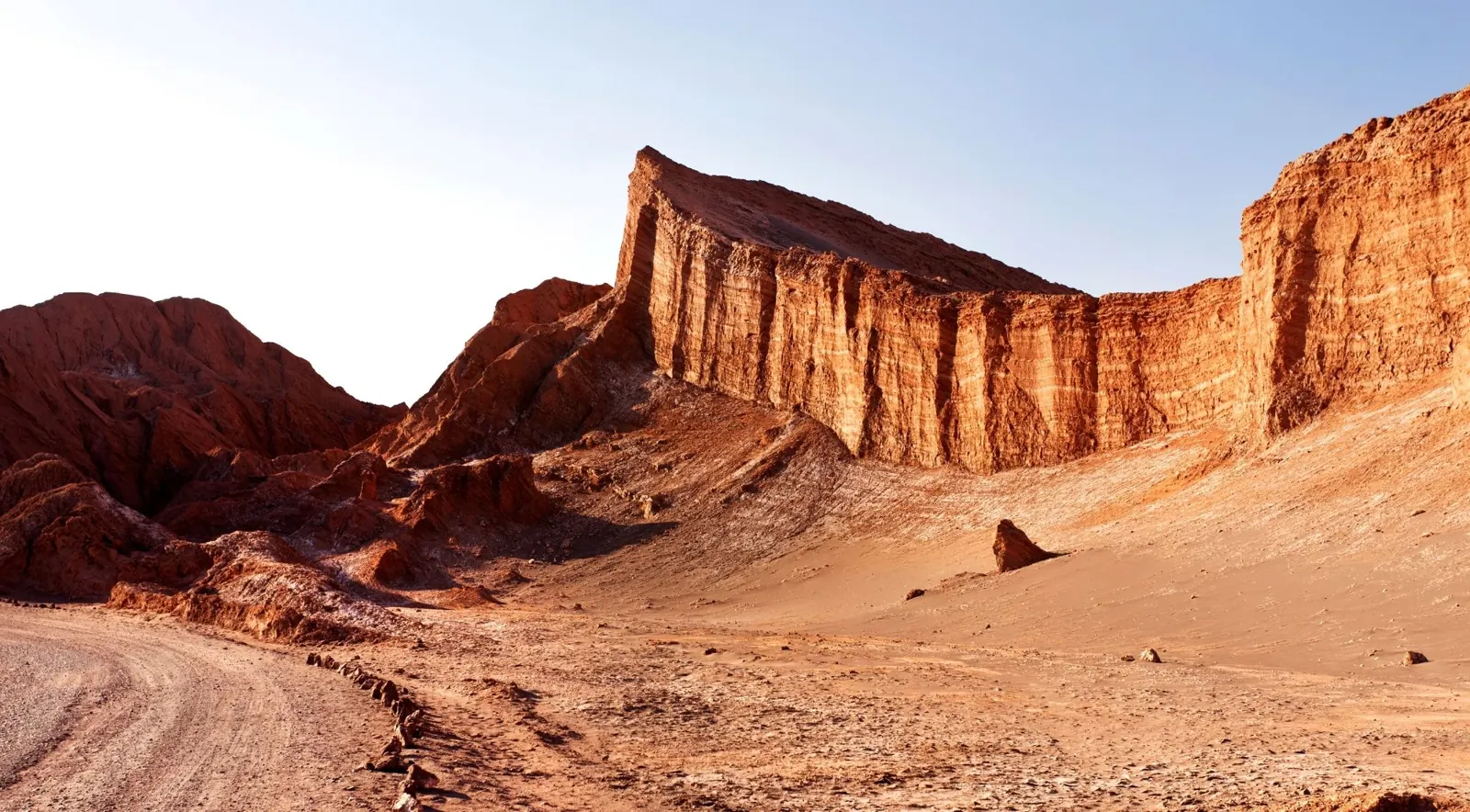
Valle de la Luna |
Salt-crusted canyons, the Tres Marías and a huge dune, about 10 minutes from town |
Half day (afternoon) |
Shared tour from US$32 (4.7/5 from 366 reviews) plus the CLP 10,800 online entry ticket |
| 2 |
Stargazing tour |
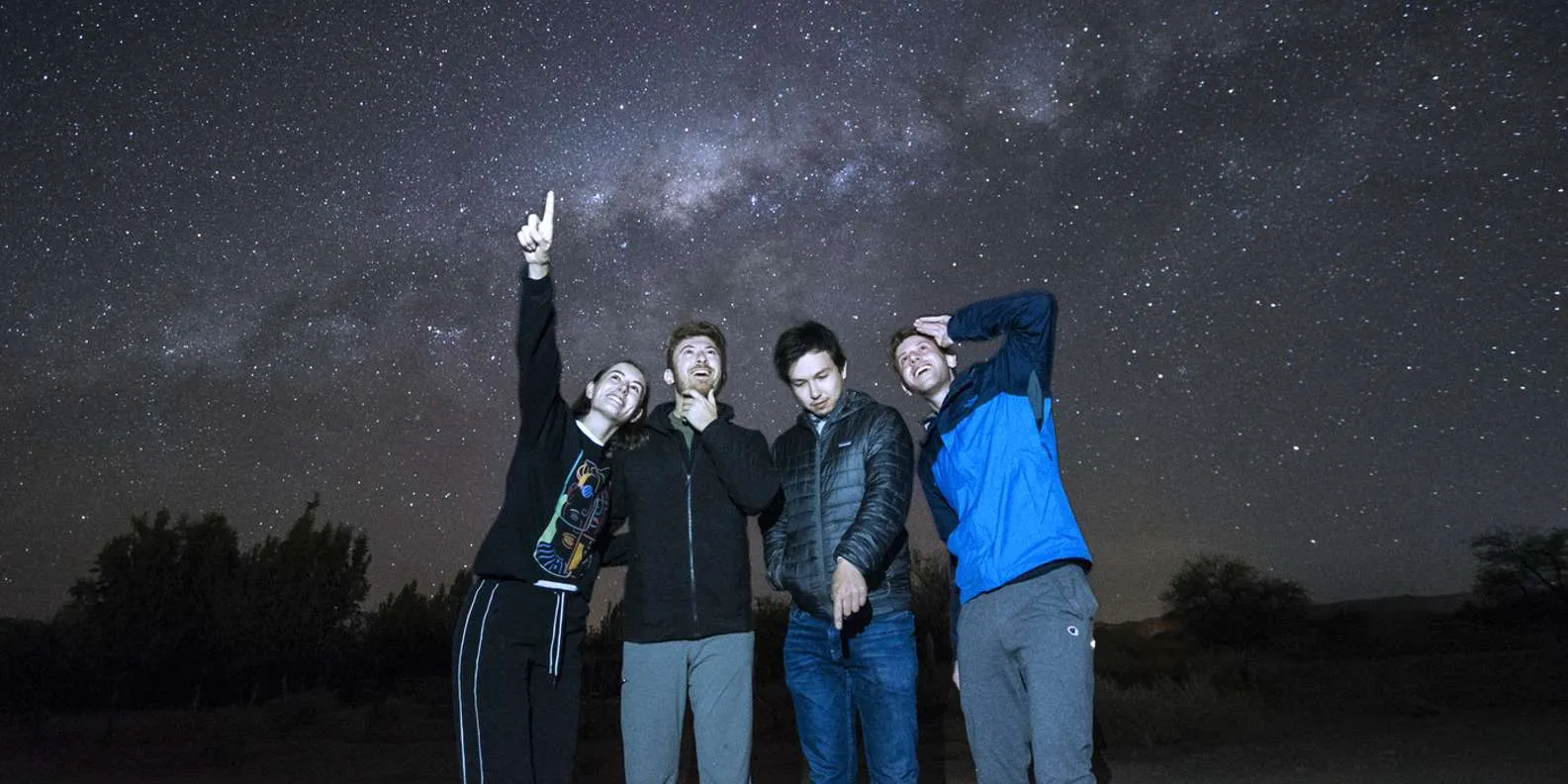
One of the clearest night skies on Earth |
About 2.5 h after dark |
Llama stargazing session from US$30 (4.7/5 from 814 reviews) |
| 3 |
El Tatio geysers at sunrise |
More than 80 geysers steaming at about 4,320 m |
About 6 h, pickup 04:30–05:10 |
Sunrise tour with breakfast from US$73 (4.7/5 from 1,151 reviews) plus CLP 15,000 entry |
| 4 |
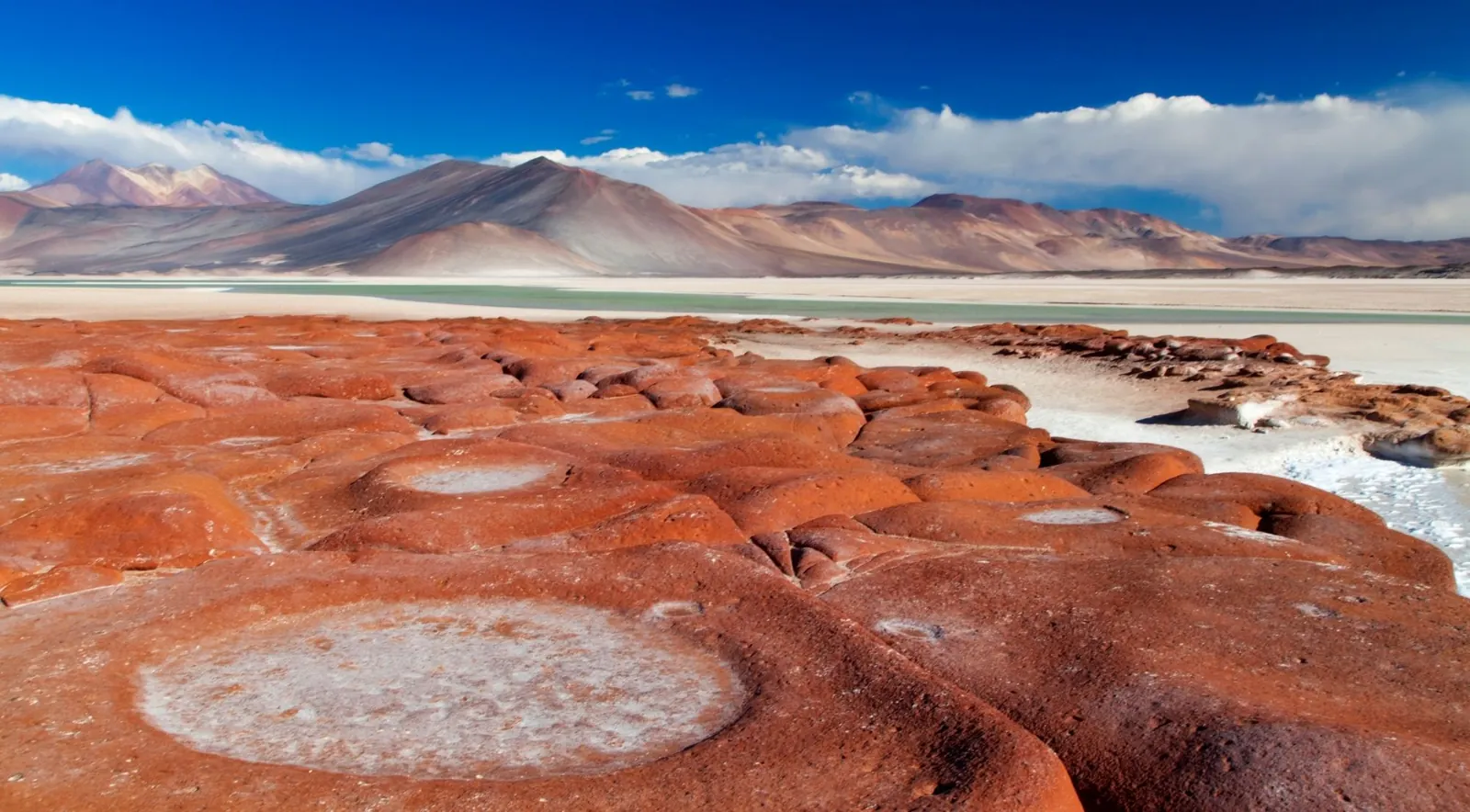
Altiplanic lagoons + Piedras Rojas |
Deep-blue lagoons under volcanoes, red rocks and vicuñas |
Full day, about 10 h |
Full-day tour from US$86 (4.7/5 from 834 reviews); entry fees extra |
| 5 |
Laguna Cejar + Tebinquiche sunset |
Float in very salty water, then watch sunset on the salt flat |
About 5 h (afternoon) |
Laguna Cejar floating tour on Viator from US$86 (5.0/5 from 80 reviews); CLP 15,000 Cejar entry |
Allow four or five full days so you can take them in an order that suits the altitude: Valle de la Luna and Cejar first, the 4,000 m trips last. If El Tatio is your must-see, plan around its predawn departure and do not put it straight after a late night. It is a different experience from Piedras Rojas, and doing both needs enough usable days and suitable weather. The full tour comparison adds start times and entry tickets for each one.
Other experiences you might enjoy
Around San Pedro you can also compare the flamingos of Laguna Chaxa, the Baltinache hidden lagoons, the Puritama hot springs and multi-day Uyuni salt flat crossings into Bolivia.
The top 15 at a glance
| # |
Experience |
Type |
Time |
Entry or price guide |
Max altitude |
Best for |
Our guide |
| 1 |
Valle de la Luna |
Tour or DIY by bike or car |
4–5 h |
Entry CLP 10,800, bought online |
About 2,600 m |
Everyone, first day |
Valle de la Luna tours |
| 2 |
Stargazing |
Tour |
About 2.5 h |
Tours from about US$30 |
About 2,400 m |
Couples, families |
Stargazing tours |
| 3 |
El Tatio geysers |
Tour or 4x4 |
About 6 h |
Entry CLP 15,000 |
About 4,320 m |
Day 3 or later |
El Tatio tours |
| 4 |
Altiplanic lagoons + Piedras Rojas |
Tour |
About 10 h |
Tours from about US$86, entries extra |
About 4,000–4,200 m |
Landscape lovers, day 3 or later |
Piedras Rojas tours |
| 5 |
Laguna Cejar, Ojos del Salar, Tebinquiche |
Tour or DIY |
About 5 h |
Cejar entry CLP 15,000, Tebinquiche a small extra fee |
About 2,300 m |
Floating, sunset |
Laguna Cejar tours |
| 6 |
Laguna Chaxa (flamingos) |
Usually part of a lagoon tour |
About 1 h on site |
Community entry, paid separately |
About 2,300 m |
Birders, photographers |
Piedras Rojas tours |
| 7 |
Puritama hot springs |
Transfer, tour or DIY |
Half day |
Entry booked on the official site, plus transport |
About 3,500 m |
Rest day, couples |
Puritama guide |
| 8 |
Rainbow Valley + Yerbas Buenas petroglyphs |
Tour |
5–6 h |
Two small cash fees |
About 3,200–3,500 m |
Early in the trip, culture |
Tour comparison |
| 9 |
Sandboarding in Valle de la Muerte |
Tour |
3–4 h |
Community entry plus the operator’s price |
About 2,500 m |
Adventure, groups |
No listing we can recommend |
| 10 |
Biking: Garganta del Diablo, Catarpe |
DIY rental or tour |
2–4 h |
Bike rental plus a small entry fee |
About 2,500 m |
Budget, active |
Tour comparison |
| 11 |
Pukará de Quitor + Aldea de Tulor |
DIY or tour |
2–5 h |
Small cash entry fee at each site |
About 2,500 m |
History, rest day |
Tour comparison |
| 12 |
Toconao + Ayllu high-altitude wine |
Tour, car or stop on a lagoon tour |
Half day |
Tasting price set by the cooperative |
About 2,500 m |
Food and wine, culture |
— |
| 13 |
Uyuni salt flat crossing (Bolivia) |
Multi-day tour |
3 days one way or 4 days return |
Tours from about US$350, plus the Bolivian park fee |
Close to 5,000 m |
Onward travellers |
Uyuni tours |
| 14 |
Volcano climb (Cerro Toco, about 5,600 m) |
Guided |
Full day |
Guided ascents from about US$110 |
Above 5,000 m |
Fit, acclimatised hikers |
Altitude guide |
| 15 |
Hot-air balloon at sunrise |
Tour |
About 4 h, about 1 h in the air |
Among the most expensive outings in town |
Low flight over the basin |
Splurge, couples |
— |
Tour prices are per person in US dollars from the listings linked on this page; entry fees are per adult in Chilean pesos. Many park and community entries are cash only.
The 15 best things to do in San Pedro de Atacama
1. Valle de la Luna (Moon Valley)
Why go: you walk among salt-crusted ridges, caves, the Tres Marías rock formations and a giant dune, all just west of town. It is the easiest big landscape in the Atacama and a good first-day trip, because the standard tour takes about four hours and leaves part of the day free.
- Duration: a 4–5 h tour. CONAF’s official trails run from the 80 m Tres Marías walk to the 3 km, three-hour Achache route.
- Price: the Valle de la Luna Shared Sightseeing Tour (4.7/5 from 366 reviews) starts at about US$32 and leaves the CLP 10,800 reserve ticket to you. The Valle de la Luna tour with entry and cocktail (4.5/5 from 443 reviews) starts at about US$63 and includes the ticket and hotel transport. Add the missing ticket before you compare the two. Reduced rates exist for students, teenagers and seniors; check them on the official shop.
- Best time: afternoon into sunset. In windy seasons the reserve has recommended morning visits.
- 2026 status: the official Valle de la Luna site says the Mirador de Ckari sector has been closed until further notice since 27 May 2026 while its safety is assessed after an earthquake. The operator sanpedroatacama.com says it may stay shut possibly until the end of 2026, partly because of widening works on the Bioceanic Route. Tours now watch sunset from other authorised spots. The official site also lists staff-training closures on 6, 13, 19, 20 and 27 October, so check it before you go.
- Tour or DIY: both work. You can bike or drive in, and you must buy your ticket online in advance. Cyclists enter between 09:00 and 11:00 from September to March.
- Full details: Valle de la Luna tours
2. Stargazing and astrophotography
Why go: high altitude, very dry air and little light pollution make this one of the world’s great places to see the night sky. Through a telescope you can see the core of the Milky Way, the Magellanic Clouds and Saturn’s rings.
3. El Tatio geysers at sunrise
Why go: according to geyser researchers Glennon and Pfaff (2003), cited by Oregon State University’s Volcano World, “with over 80 active geysers, El Tatio is the largest geyser field in the southern hemisphere and the third largest field in the world.” The geysers steam hardest in the freezing dawn. In Kunza, the Lickanantay language, Tatio means “the grandfather who cries”.
- Duration: about 6 h, with pickup between 04:30 and 05:10.
- Price: the Tatio Geysers at Sunrise tour with breakfast (4.7/5 from 1,151 reviews) starts at about US$73 and adds Andean wildlife scenery on the way back. Entry is CLP 15,000, paid separately, and children are admitted from age 9 under the park’s current rules.
- Altitude: about 4,320 m. Do it on day 3 or later and read the age and health restrictions before you book.
- Watch out: temperatures well below zero at dawn, and snow closures in winter.
- If the altitude or the departure time rules it out, use the day for a lower desert outing or rest.
- Full details: El Tatio geyser tours
4. Altiplanic lagoons (Miscanti and Miñiques) + Piedras Rojas
Why go: this is the Atacama’s postcard. Cobalt lagoons sit under snow-capped volcanoes at more than 4,000 m, and the rust-red rocks of Piedras Rojas lie beside the Salar de Aguas Calientes. Expect vicuñas, the Tropic of Capricorn marker and the village of Socaire.
5. Laguna Cejar, Ojos del Salar and a Tebinquiche sunset
Why go: you float in very salty water inside the Salar de Atacama, then toast the sunset on the mirror-like salt crust of Laguna Tebinquiche.
- Duration: about 5 h (afternoon).
- Price: Cejar entry is CLP 15,000 for ages 13–59, CLP 10,000 from 60 and CLP 5,000 under 12; Tebinquiche charges a small extra fee. The Laguna Cejar floating tour on Viator (5.0/5 from 80 reviews) is the best-reviewed listing we found; the GetYourGuide Cejar tour has only a handful of reviews so far.
- Swimming rules: you float in Laguna Piedra, part of the Cejar complex, not in Cejar itself. Laguna Piedra is not suitable for children under 6. The site has showers. Bring flip-flops, because the salt crust cuts feet.
- Best for: your first or second day, since it is low and relaxing.
- Full details: Laguna Cejar tours and the Baltinache versus Cejar comparison
6. Laguna Chaxa: flamingos on the salt flat
Why go: Chaxa is among the most reliable places to see flamingos close to San Pedro. It lies in the flamingo sector of the Reserva Nacional Los Flamencos, in the middle of the Salar de Atacama.
- Duration: about 1 h on site, usually combined with the lagoons tour or with Toconao.
- Price: a community entry fee, paid separately; the figures we found disagree, so check the current rate at the gate or with your operator. The Red Stones, highland lagoons and Chaxa triple tour includes the stop.
- Best time: late afternoon light, or sunset as the last stop on triple tours.
7. Termas de Puritama hot springs
Why go: terraced thermal pools sit in a canyon fed by the Puritama River, with water at 28–31 °C according to the official site. It is a different kind of water visit from Cejar, warm soaking instead of salt-water floating, and a good way to spend a rest day or recover after El Tatio.
- Duration: half day, in the official AM slot (09:30–13:30) or PM slot (14:30–18:00).
- Price: book entry on the official site, which sets the price by date; children under 12 pay a children’s rate and under-3s go free. Transfers are sold separately, and the selected GetYourGuide transfer excludes admission.
- Location: about 3,500 m, 28 km north of town on Route B-245.
- Booking: buy online and bring your ticket and ID, because there is no phone signal. No food is sold, so bring your own. Ask about paths and pool access if mobility affects your choice.
- Full details: Puritama hot springs
8. Rainbow Valley (Valle del Arcoíris) + Yerbas Buenas petroglyphs
Why go: the hills are striped red, green and white by minerals. On the way you stop at Yerbas Buenas, one of the most important rock-art sites in the region, with llamas, foxes and caravan figures carved by pre-Hispanic travellers.
- Duration: 5–6 h (morning).
- Price: GetYourGuide has no listing; the Rainbow Valley Tour from San Pedro on Viator (4.7/5 from 35 reviews) is the one we would book. Two small entry fees are paid in cash.
- Altitude: about 3,200–3,500 m. Operators recommend it in your first days as a step up before the 4,000 m trips.
- Best for: an easy, cultural warm-up.
9. Sandboarding in Valle de la Muerte (Valle de Marte)
Why go: this is the Atacama’s adventure classic. You ride steep sand slopes a few minutes from town, with the Licancabur volcano in view.
- Duration: 3–4 h, as a morning or sunset session.
- Price: board, boots and a short lesson are usually included in the operator’s price; the valley charges its own entry. We found no online listing with enough reviews to recommend, so compare agencies in town.
- Tip: you walk back up after every run, and at 2,500 m that is harder than you expect. Bring water, and check the day before, because the valley is reported to close on Mondays.
10. Biking: Garganta del Diablo and the Catarpe Valley
Why go: this is the cheapest half-day adventure in town. You ride north along the San Pedro river valley into the narrow Devil’s Throat canyon, then return past Pukará de Quitor.
- Duration: 2–4 h.
- Price: bikes are rented from shops on Caracoles and Toconao streets, so compare daily rates; the canyon charges a small community entry fee. If you prefer a guide, the Devil’s Throat bike tour on Viator (5.0/5 from 111 reviews) starts at about US$95.
- Options: e-bikes are widely offered. You can also cycle to Valle de la Luna, about 45 minutes each way on the flat, but cyclists must enter by 11:00.
- Tip: start early, because the afternoon wind and sun are hard going. Carry 2 litres of water and a repair kit.
11. Pukará de Quitor and Aldea de Tulor (archaeology)
Why go: Pukará de Quitor is a 12th-century stone fortress on a hillside above the San Pedro river. It was one of the last strongholds against the Spanish in 1540 and was declared a National Monument in 1982. Aldea de Tulor is a village of round mud houses more than 2,000 years old.
- Duration: 2 h on your own (Quitor is a 3 km walk or ride north of town) or a 4–5 h combined tour.
- Price: each site charges a small entry fee in cash. Agencies in town sell combined tours; the online listings we found have only a couple of reviews each.
- Note: some visitors find Tulor underwhelming because much of what you see is reconstruction. A good guide makes the difference.
12. Toconao village and Ayllu high-altitude wine
Why go: Toconao is a white volcanic-stone village 38 km south of town at about 2,500 m. Its church bell tower dates from 1750 and is a National Monument. Nearby, the green Quebrada de Jerez ravine is full of quince and fruit orchards. Toconao is also home to Ayllu, wine made by the Cooperativa Viñateros de Altura Lickan Antay, whose 18 farming families grow vines above 2,400 m, some on terraces at Socaire above 3,500 m. Ayllu means “community” in Kunza.
- Duration: half day. Toconao is also a stop on many lagoon tours.
- Price: the cooperative runs cellar and vineyard tastings; check its current prices when you book.
- Best for: food and wine lovers, culture, a rest day.
13. The Uyuni salt flat crossing into Bolivia
Why go: this is one of South America’s great overland trips. You cross coloured lagoons, geysers and flamingo-filled salt flats to reach the Salar de Uyuni.
14. Volcano climbs: Cerro Toco, Láscar and more
Why go: you stand above 5,000 m with views across the Andes. Cerro Toco (about 5,600 m) is the usual first 5,000 m peak, because a vehicle takes you close to the top. Láscar is one of Chile’s most active volcanoes, and summits there depend on its activity status.
15. Hot-air balloon at sunrise
Why go: you drift over the Salar de Atacama and the Cordillera de la Sal as the sun rises behind Licancabur.
- Duration: about 4 h in total, about 1 h in the air, with pickup around 05:00.
- Price: among the most expensive outings in town; the local agency Nomades listed it at CLP 280,000 per person in 2026, and private baskets cost far more. We found no online listing to recommend.
- Note: flights depend on the weather and are cancelled in strong wind, so book with a cancellation guarantee.
Honourable mentions
- Lagunas Escondidas de Baltinache: seven turquoise salt lagoons about an hour away. Swimming has been suspended since 29 September 2026. SanPedroAtacama.com says bathing and floating are off until the end of November 2026, with one lagoon expected to reopen for floating in December. The site stays open for viewing, walks and picnics, and the Baltinache Hidden Lagoons tour (4.5/5 from 146 reviews) still runs as a sightseeing trip. Go for the scenery, not the swim. See Baltinache tours.
- Horseback riding: half-day rides from local ranches into the Cordillera de la Sal and the Catarpe valley.
- ALMA Observatory: the world’s largest radio telescope. ALMA says its public visit programme is currently suspended, with a limited programme for educational, research and media groups. It held special public open days in October 2026; watch almaobservatory.org for news of the regular programme.
- Vallecito and Cordillera de la Sal hikes and photography tours: quieter alternatives to the Valle de la Luna crowds.
In town: things to see in San Pedro de Atacama
Keep a few unbooked hours around the centre for a meal, a quiet walk and the practical tasks that make the excursions easier.
- Iglesia de San Pedro: this whitewashed adobe church stands on the west side of the plaza and is the largest of the Atacameño churches. Its walls are almost a metre thick. Look up at the ceiling, made of cactus-wood (cardón) slats covered with mud and straw and tied with llama-leather straps instead of nails. Inside are murals dated to 1774; the tower was added in 1964. It was declared a National Monument in 1951. Entry is free (donations welcome), it usually opens in the daytime with a midday break, and Sunday mass is a lovely local moment.
- Plaza de Armas and Calle Caracoles: pepper trees, benches and the town’s social life. Caracoles is the main street of restaurants, agencies and shops, pedestrianised in the centre.
- Paseo Artesanal (craft market): alpaca and llama-wool knits, ceramics and Lickanantay crafts beside the plaza. Prices are often better in Toconao and from makers who sell directly.
- Museo Gustavo Le Paige: closed. The original museum, with about 380,000 artefacts covering more than 11,000 years of Atacameño history, was dismantled between 2015 and 2017. The firm that won the 2015 tender for a new building later sued, arguing that the new museum did not fit on the site (BioBioChile, 2017). In April 2022 the Ministry of Public Works awarded a new pre-feasibility study (La Tercera), and the new museum still has no opening date. Ignore websites that list opening hours unless the Universidad Católica del Norte confirms them. The ancestral human remains are no longer displayed, out of respect for the Atacameño communities.
- Tourist information office: on Toconao street, open on weekdays and Saturday mornings; check the hours locally.
Choose central accommodation if you want to walk to agencies and dinner.
Food and drink in San Pedro de Atacama
Dishes and flavours to try
- Patasca: a hearty Andean stew of mote (hominy) and meat.
- Llama meat: lean and slightly sweet, served grilled, as carpaccio or in a stew.
- Quinoa: in soups, risottos and salads.
- Chañar and algarrobo: native desert-tree fruits used in syrups, flours and desserts.
- Rica-rica: an aromatic desert herb found in ice cream, pisco sours and even local beer.
- Sopaipillas: fried pumpkin flatbreads, good with a craft beer.
- Ayllu wine: Toconao’s high-altitude Syrah, Malbec, Pinot Noir and Moscatel.
Restaurants to try
| Restaurant |
Style |
Price |
Why go |
| Adobe (Caracoles) |
Chilean-international, open fire |
$$–$$$ |
A town institution with live Andean music and among the most-reviewed restaurants in town. Arrive early or expect a wait. |
| Ckunna (Caracoles) |
Chilean-Andean, homemade pasta |
$$–$$$ |
An atmospheric patio and quinoa dishes; a favourite for a special dinner. |
| Baltinache (Domingo Atienza) |
Indigenous-fusion tasting menu |
$$–$$$ |
Local ingredients and intimate fine dining, booked by WhatsApp. Some listings show it as temporarily closed, so confirm. |
| La Picada del Indio |
Chilean home cooking |
$–$$ |
Big portions and good value. |
| Las Delicias de Carmen |
Chilean, set lunches |
$–$$ |
A classic menú del día. |
| Pizzería El Charrúa |
Pizza |
$ |
Cheap, fast and well liked. |
| Inca’s Restaurant |
Peruvian |
$$ |
Ceviche and lomo saltado. |
| Roots Café & Bar / Lola |
Café-bar |
$$ |
Brunch and coffee by day, with a happy hour at Lola in the evening. |
Opening days change often in a small town, so check before you walk across for dinner. La Estaka is listed as permanently closed in one source and Mal de Puna as temporarily closed. Our guide to the best restaurants in San Pedro de Atacama compares more than 20 places by price and cuisine.
Nightlife: what to do at night in San Pedro de Atacama
Nights in San Pedro are quiet on purpose: dinner by the fire, live Andean music, a craft beer and the stars. There are no clubs.
- Closing times: venues selling alcohol close early by big-city standards, around 1 a.m. on weeknights and a little later at weekends, according to a resident quoted by BioBioChile in 2022. The municipality sets the hours, so check locally.
- Order food with drinks: most venues hold restaurant licences, so you order food with alcohol. Chela Cabur is the well-known beer bar with loud rock, and Cervecería St. Peter brews local beers, including one with rica-rica.
- Drinking in the street or plaza is illegal, and the Carabineros (police) fine people for it.
- The best late-night activity is a stargazing tour. Alcohol, altitude and a 04:30 El Tatio pickup are a bad combination.
Free and cheap things to do in San Pedro de Atacama
- Walk the plaza, church and Caracoles (free).
- Watch sunset from the edge of town or the road towards Valle de la Muerte (free; respect private and community land).
- Bike to Garganta del Diablo and Catarpe (bike rental plus a small entry fee).
- Walk to Pukará de Quitor (about 3 km; small entry fee).
- Stargaze from your hostel courtyard on a moonless night. Away from street lights you can see the Milky Way with the naked eye.
- Drive to Laguna Cejar or Valle de la Luna with friends and split the car, so you pay only the entries.
- Browse the craft market and go to Sunday mass at the church.
Best picks by traveller type
| Traveller |
Our picks |
| First-timers (4–5 days) |
Valle de la Luna → Laguna Cejar → Rainbow Valley → El Tatio → Altiplanic lagoons, with stargazing on a dark night |
| Couples |
Tebinquiche sunset, private stargazing, Puritama, a balloon flight, dinner at Ckunna or Baltinache |
| Families with kids |
Laguna Cejar (reduced entry for children; Laguna Piedra is not for under-6s), stargazing, the short Valle de la Luna trails, Quitor. El Tatio admits children from 9 under park rules, and many operators set 12, so check. |
| Adventure seekers |
Sandboarding, Garganta del Diablo by bike, Cerro Toco, horseback in Catarpe |
| Budget travellers |
Bike trips, Quitor on foot, shared tours, cheap set lunches |
| Culture lovers |
Yerbas Buenas petroglyphs, Quitor and Tulor, Toconao and Ayllu wine, the church, Socaire |
| Photographers |
An astrophotography session, Piedras Rojas, Chaxa at sunset, El Tatio at first light |
Rest days and bad-weather alternatives
- After El Tatio or on a rest day: Puritama hot springs, a long lunch in town, the craft market, Quitor at golden hour, or yoga and spa treatments offered by several hotels and studios.
- When snow closes the high sites (most often in the winter months and during the summer Altiplanic rains): swap El Tatio or the lagoons for Valle de la Luna, Laguna Cejar, Rainbow Valley or sandboarding, which sit lower and are rarely affected. See the best time to visit.
- When wind or dust is bad: choose the archaeology sites, Toconao and the wine cellar, or a spa afternoon.
Practical planning
- How many days? Four full days cover the top five; five or six give you a buffer for weather and altitude. Add three or four days if you are crossing to Uyuni. See how many days to spend and the two-day, three-day and four-day plans.
- Altitude order: spend days 1–2 on low trips (Valle de la Luna, Cejar, Rainbow Valley), day 3 on Puritama or El Tatio, and days 4–5 on the lagoons above 4,000 m. Read the altitude guide.
- Getting there: fly to Calama, then take a transfer of about 1.5 hours; the Calama Airport transfer (4.6/5 from 858 reviews) starts at about US$30. See Calama airport to San Pedro.
- Where to stay: see where to stay in San Pedro de Atacama.
- Cash: bring Chilean pesos. Many park and community entries, Rainbow Valley, Tebinquiche, Tulor and Quitor among them, are cash only, and the ATMs in town can run dry in high season, so withdraw in Calama.
- Booking in town or online: in town you can sometimes negotiate multi-tour packs. Online you get a guaranteed place, free cancellation on many listings and verified reviews. In peak season (December to February, July and Easter), book Valle de la Luna tickets, Puritama entry, Laguna Cejar and stargazing in advance.
- Several tours at once: the Best of Atacama: 4 tours in 3 days combo (4.7/5 from 346 reviews) starts at about US$370; see multi-day tours for what it leaves out.
- New to the region? Our Atacama Desert travel guide explains the desert itself, the wider region and what a trip costs.
Responsible travel in the Atacama
- Many sites are run by Lickanantay communities, among them Cejar, Tebinquiche, Rainbow Valley, Tulor, Quitor and the land around Puritama. Your entry fee goes to them. Stay on marked trails, because some land is sacred or ancestral and closed to visitors.
- Do not climb on formations. One of the Tres Marías has already been lost to damage. Keep off salt crusts and rock art.
- No sunscreen in the lagoons. Operators ban sunscreen and oils before floating at Laguna Piedra and, when it reopens, Baltinache. Showers are short because water is scarce.
- Water is precious in the driest non-polar desert on Earth. Take short showers and refill bottles instead of buying plastic.
- Drones: expect them to be banned or restricted in protected areas and community sites. Ask before you fly.
- Leave no trace: pack out everything, including fruit peel and toilet paper.
- Respect closures such as Ckari, Baltinache swimming and Salar de Tara. They exist for safety or to let the ecosystem recover.
What’s closed or changed in 2026
| Site |
Status (October 2026) |
| Mirador de Ckari (Valle de la Luna) |
Closed since 27 May 2026 for a post-earthquake safety review |
| Valle de la Luna |
Open; staff-training closure days on 6, 13, 19, 20 and 27 October |
| Baltinache lagoons |
Swimming suspended since 29 September 2026; viewing and walks allowed |
| ALMA Observatory |
Regular public visits suspended |
| Museo Gustavo Le Paige |
Closed; the new museum has no opening date |
| Salar de Tara |
Closed to tourism; do not book it |
| Hito Cajón and the Eduardo Avaroa reserve (Uyuni route) |
Snow closures in winter 2026; check on the day |
| Bolivia (Uyuni tours) |
Fuel supply problems in 2026; ask your operator |
Common visitor regrets
- “We did El Tatio on day one and felt awful.” Save the 4,000 m trips for day 3 or later.
- “We didn’t bring cash.” Many entries are cash only.
- “We crammed two tours into a day.” A 04:30 El Tatio start plus an afternoon tour is exhausting. Pair El Tatio with a rest afternoon or Puritama.
- “We booked stargazing during a full moon.” Check the lunar calendar first.
- “We under-packed for the cold.” Dawn at El Tatio is well below freezing, while midday is hot. Bring layers, a hat, gloves and SPF 50, and see what to pack.
- “We trusted an old blog.” Ckari, Baltinache swimming, Tara, ALMA and the museum have all changed.